Myofascial Release & Massage in Rancho Cucamonga
Less tension.
More comfortable movement.
Personalized hands-on care for muscles and soft tissue, with pressure and techniques that fit your needs.
At Blissful Wellness, myofascial release and massage are available as a standalone treatment or alongside acupuncture and chiropractic care.
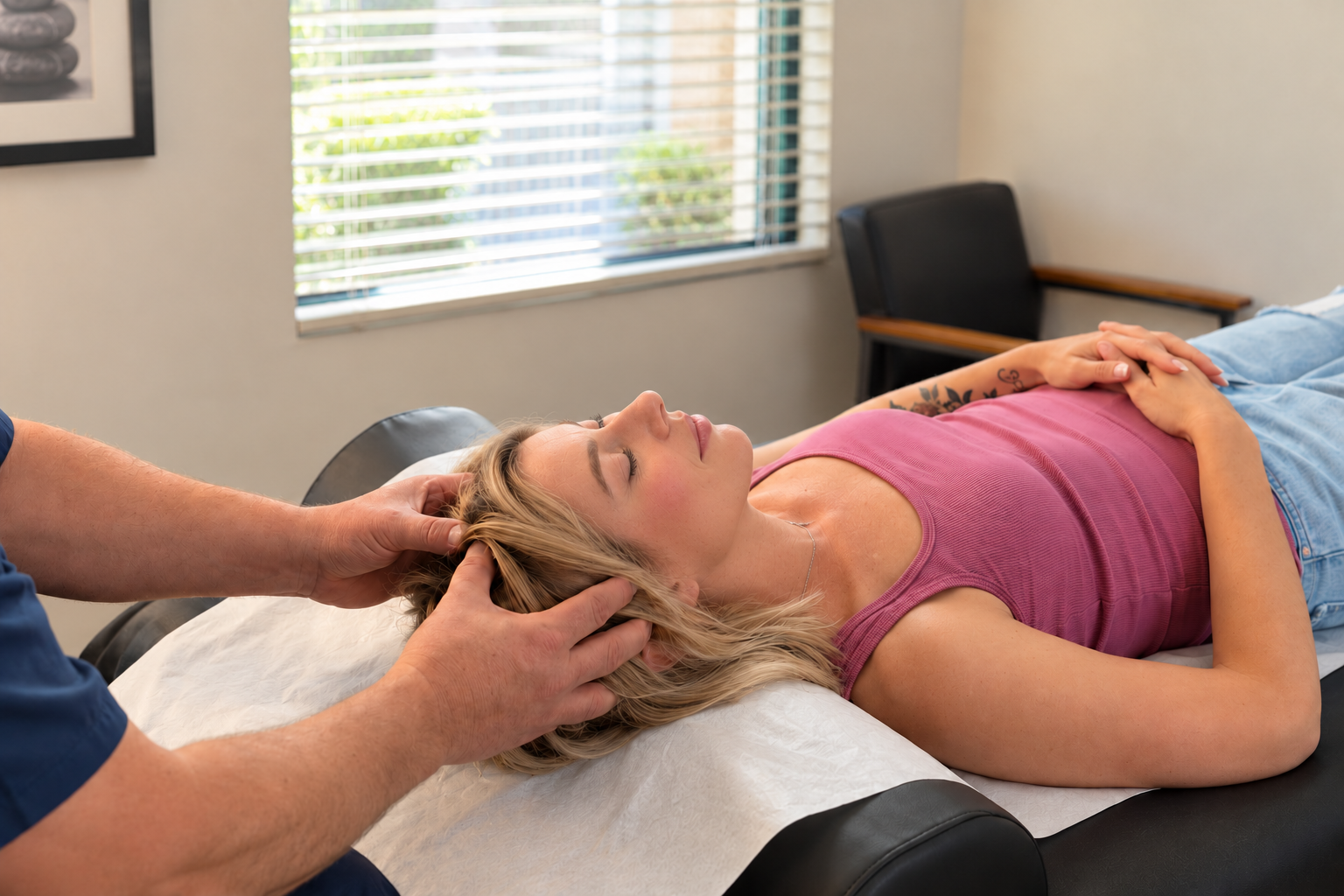
A treatment of its ownSeparate massage appointments are self-pay.
Pressure you can guideTell us what feels comfortable, and ask us to adjust.
Care that can work togetherCombine services when they fit your goals.
Understand your care
What is myofascial release & massage?
Myofascial release is hands-on work directed at muscles and fascia—the connective tissue surrounding and supporting muscles. Massage includes a range of techniques that apply pressure and movement to soft tissue.
Our approach may include sustained pressure, focused work on tender muscle areas, or massage over a broader region. We choose the technique, treatment area, and pressure based on your symptoms, preferences, and response.
The goal is to help you feel and move more comfortably. Your session can focus on a specific concern or more general muscular tension.
What brings you here?
Focused care for everyday tension.
Neck & shoulder tension
Tight or tender muscles after desk work, prolonged sitting, or everyday activity. Tell us where you feel restricted and what movements bother you.
Back & hip discomfort
Muscular tightness around the upper back, low back, or hips. New, severe, or radiating symptoms may need an evaluation before soft-tissue treatment.
Activity & whole-body tension
Muscle discomfort after activity or a sense of being tense throughout the day. We discuss what you want to focus on and which areas to avoid.
These concerns can have different causes. Massage is not a substitute for evaluating an injury or new neurological symptoms. Explore our Conditions page.
Four approaches. Your preferences.
The technique should fit you.
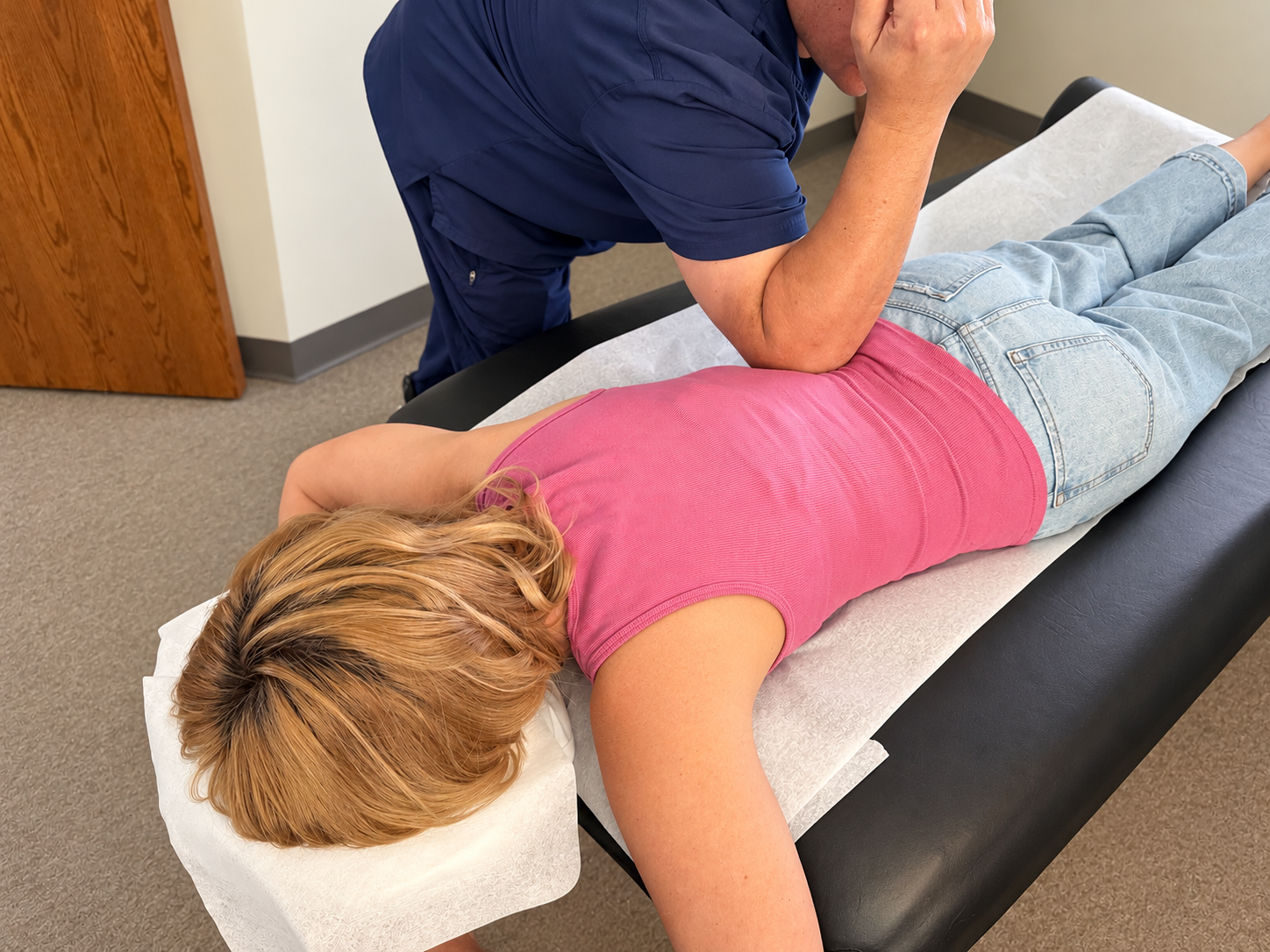
Trigger point work
Focused pressure on tender muscle areas, sometimes described as “knots.” We check your response and adjust the contact and pressure to your tolerance.
Deep tissue massage
Slower, firmer work on selected muscles and soft tissue. “Deep” does not mean pushing through pain; pressure is discussed and adjusted throughout your session.
MRT
Targeted manual soft-tissue work included in our myofascial care. Your provider explains the proposed technique, the area being treated, and what you may feel before beginning.
Acupressure
Hands-on pressure at selected points on the body. Acupressure uses fingers or hands rather than acupuncture needles, and the pressure can be adapted to your comfort.
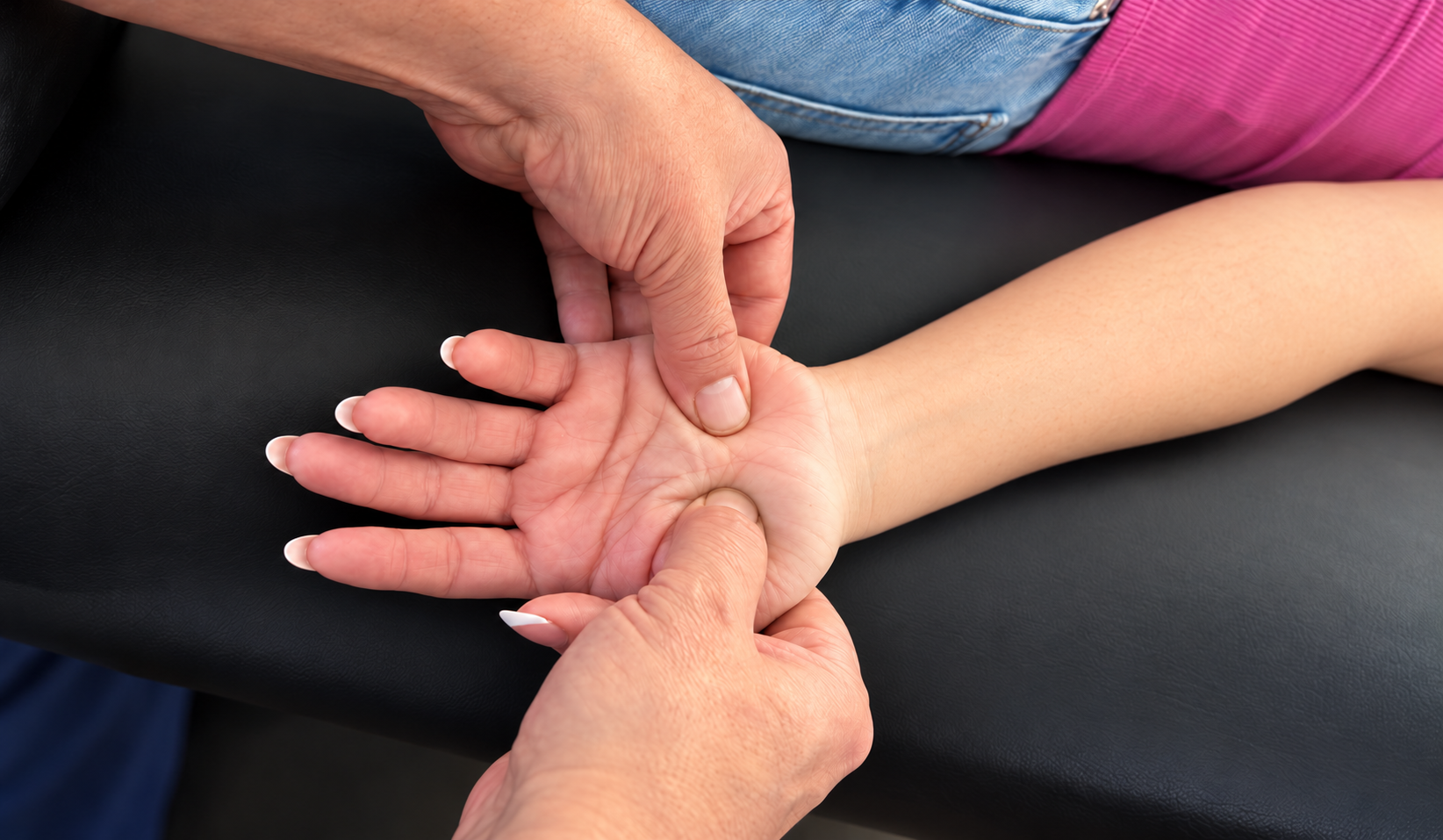
Your session may use one approach or a combination. You do not need every technique, and you can decline any proposed treatment.
Comfort matters
More pressure is not always better.
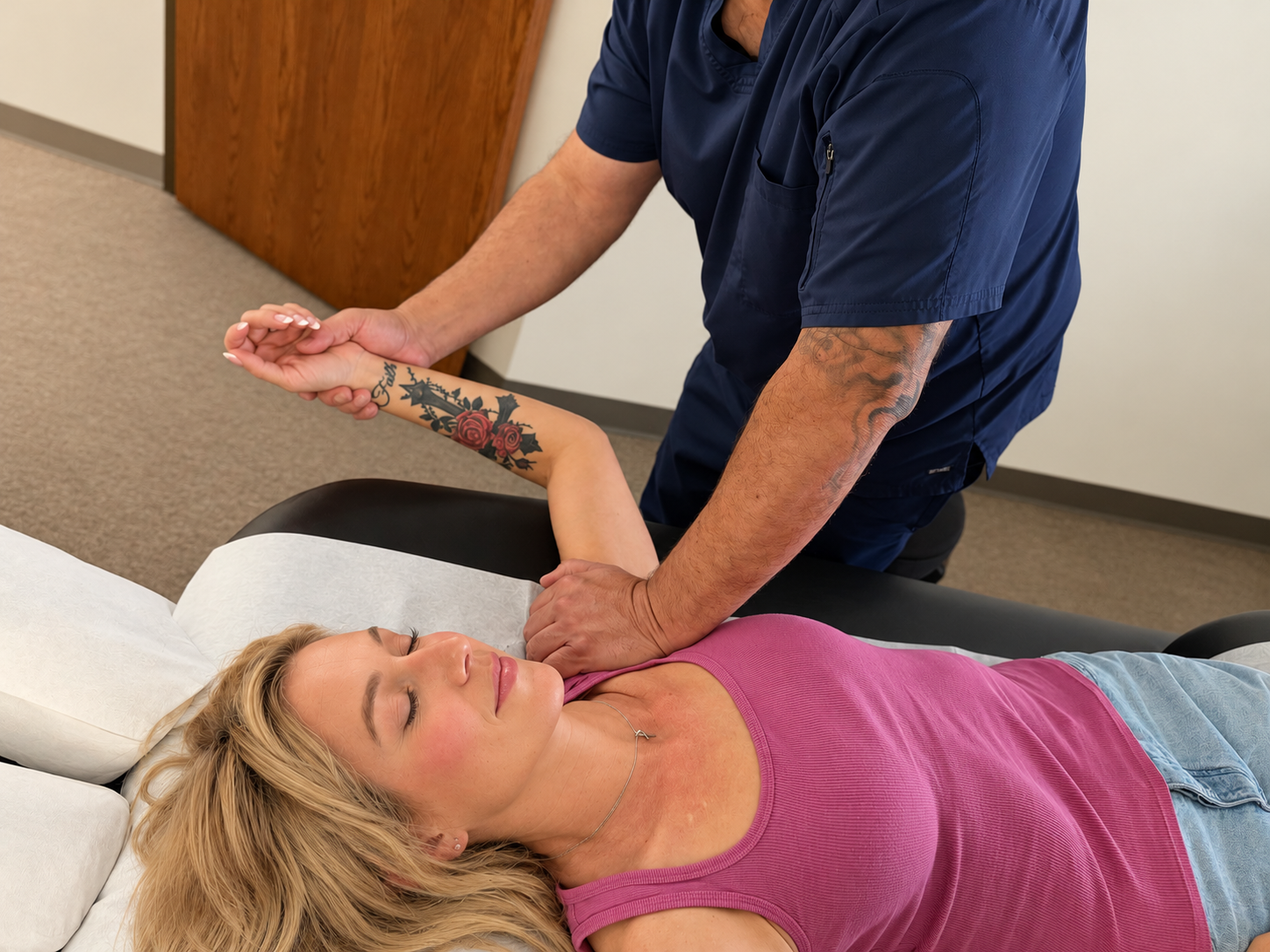
Your preferences matter. Some people want firmer work; others do better with a lighter touch or shorter periods of focused pressure.
Tell us about sensitive areas, previous experiences, and any concerns about positioning or touch. We explain what we plan to do before treatment.
You can guide the session.
You never need to endure uncomfortable pressure to make the session count.
- Ask for lighter or firmer pressure.
- Tell us about sharp pain, tingling, or discomfort.
- Request a position change, a pause, or a stop.
- Let us know which areas you prefer not to have treated.
Care that works together
Muscles, joints, and comfort.
A coordinated approach.
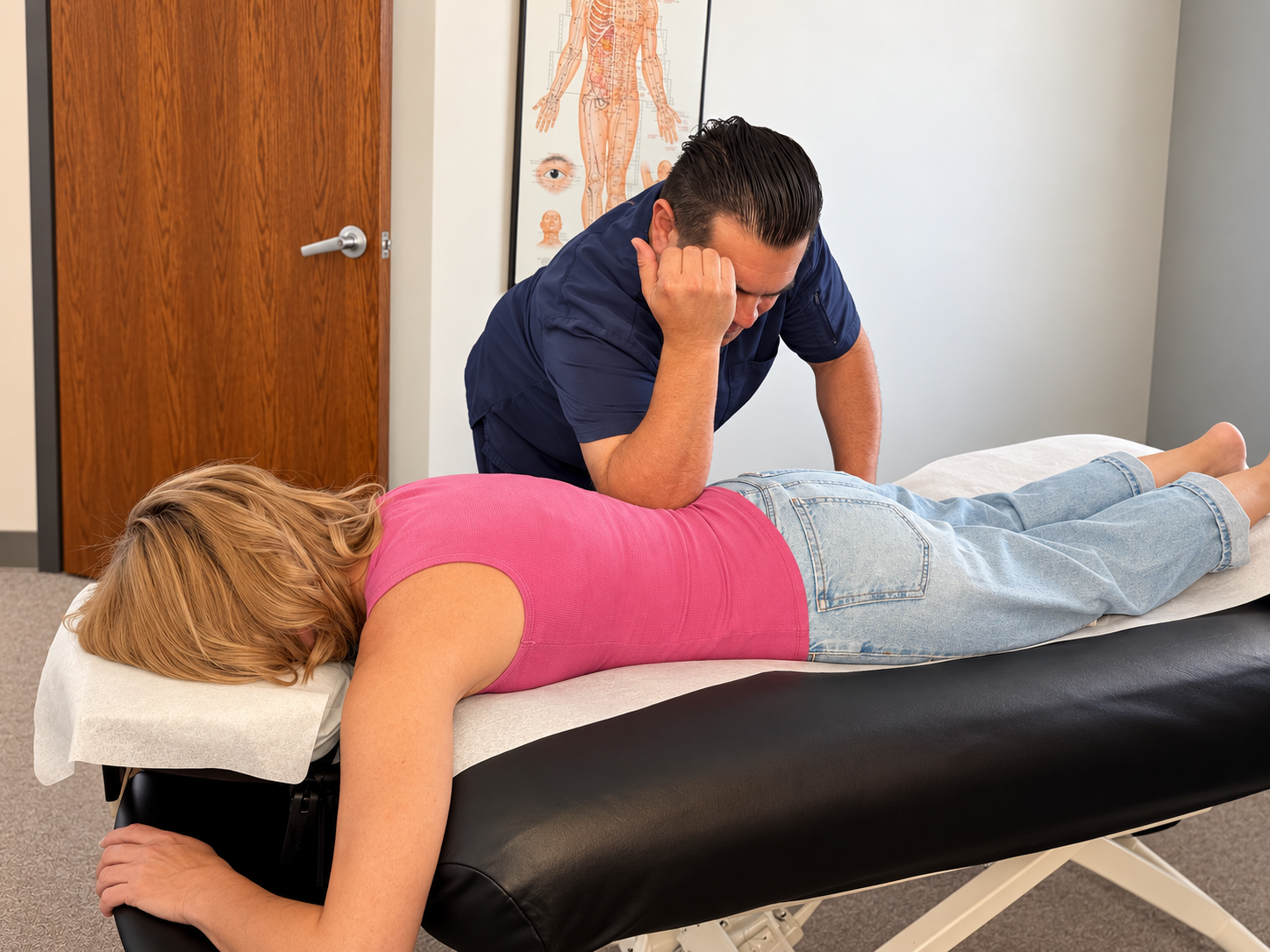
Myofascial work is almost always integrated into our acupuncture and chiropractic care. It gives us a hands-on way to address muscular tension and tenderness alongside the other parts of your treatment plan.
With acupuncture
Focused muscle care alongside your acupuncture treatment.
Acupuncture and hands-on soft-tissue work are different approaches. When muscle tension is part of your concern, we may combine acupuncture with trigger point work, MRT, massage, or acupressure.
- Address muscular tenderness: Focused hands-on work can target tight or sensitive areas that are part of your symptoms.
- Support treatment comfort: The aim may include making it easier to settle into a comfortable position for your acupuncture session.
- Follow your response: We adjust the area, pressure, and sequence to your tolerance rather than using the same combination for everyone.
We explain which parts of your concern each approach is intended to address. Soft-tissue work is performed separately from needle placement; pressure is not applied over inserted needles.
Explore acupuncture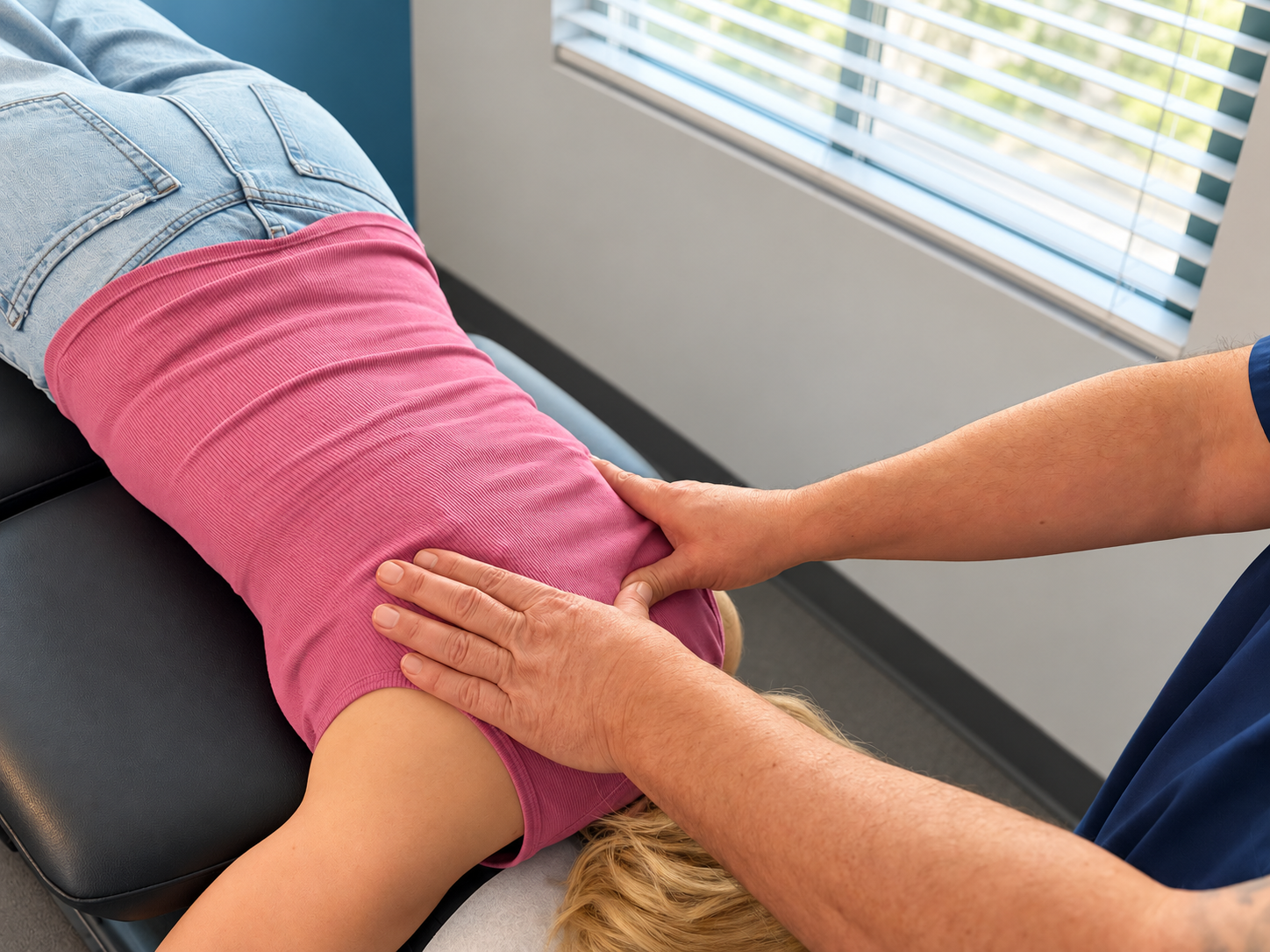
With chiropractic care
Soft-tissue care alongside joint-focused treatment.
Restricted movement may involve both joints and surrounding muscles. Chiropractic adjustments or mobilization address joint movement, while myofascial work focuses on the muscles and soft tissue around those areas.
- Address surrounding tension: Targeted work may be used around the neck, shoulders, back, or hips when appropriate.
- Support comfortable movement: Easing muscular discomfort may make positioning and movement during your visit more comfortable.
- Connect care to daily activity: Your plan may also include movement guidance so the focus extends beyond how you feel on the treatment table.
Your doctor chooses the sequence and technique after an evaluation. Massage does not require an adjustment, and you can decline either part of care.
Explore chiropractic careHow does integrated care support your goals?
By addressing muscular discomfort alongside joint movement or acupuncture care, we aim to make the overall plan more useful for your particular needs. We look for practical changes: less tenderness, easier movement, more comfortable positioning, and better tolerance of everyday activities.
Each treatment should serve a clear purpose. Benefits vary, and combining services does not guarantee faster, greater, or longer-lasting relief. We reassess whether each part of your care is helping.
Also available on its own
Prefer a separate massage session?
Book Myofascial Release & Massage as a standalone, self-pay appointment. Acupuncture and chiropractic care are optional; we do not accept insurance for separate massage sessions.
Insurance and integrated visits
Myofascial work is almost always included in our acupuncture and chiropractic care and may be billable as part of that care, depending on the services provided and your plan’s benefits. This differs from a separate massage appointment, which is self-pay. Ask our team to verify your benefits and expected costs before treatment; verification is not a guarantee of payment.
Verify benefits for acupuncture or chiropractic careYour appointment
A session shaped around your goals.
-
Share what you need
Tell us about your symptoms, health history, activity, and the areas you want us to focus on—or avoid.
-
Agree on an approach
Discuss the technique, pressure, positioning, and whether this is a standalone visit or part of a combined care plan.
-
Check in during treatment
Let us know how the pressure feels. We can adjust the approach, change position, or stop.
-
Review your response
Discuss how you feel afterward and whether further care makes sense for your goals.
Thoughtful care. Realistic expectations.
Know what to expect—and when to pause.
What the research says
Massage may provide short-term relief for some types of muscle-related pain. Evidence varies by condition, and research does not establish that one massage style is best for everyone.
We focus on your response and practical goals, such as how comfortably you move or manage everyday activities.
Read the NIH overview of massage therapyShare your health history
Tell us about blood thinners, easy bruising, osteoporosis, recent surgery or injury, skin concerns, pregnancy, or a history of blood clots before treatment. Some situations require lighter pressure, a different approach, or medical clearance.
Temporary soreness can occur. Massage should not delay medical care for a new or worsening problem.
Seek urgent medical care for new weakness, loss of bowel or bladder control, or a suddenly swollen, painful limb. Call 911 for chest pain or trouble breathing.
Answers before your visit
Myofascial release & massage: common questions.
How is myofascial release different from massage?
Myofascial release focuses on muscles and their surrounding connective tissue, often using sustained or targeted pressure. Massage covers a broader range of soft-tissue techniques. Your session may include both, depending on your goals and preferences.
Is myofascial release and massage available on its own or integrated with acupuncture and chiropractic?
Both. At Blissful Wellness, myofascial work is almost always integrated into our acupuncture and chiropractic care to address muscular tension alongside the other parts of your treatment plan. Separate, standalone massage sessions are also available as self-pay appointments.
Does deep tissue work need to hurt?
No. Firmer pressure does not need to mean pushing through pain. Tell your provider about discomfort, sharp pain, or tingling so the pressure or technique can be adjusted or stopped.
Is acupressure the same as acupuncture?
No. Acupressure uses fingers or hands to apply pressure at selected points. Acupuncture uses fine needles. They are different treatment methods, and your provider can explain which options fit your preferences.
What should I wear, and how long is the appointment?
Ask our team when booking so clothing, positioning, and the appointment length match the treatment you have selected. Tell us about any comfort or privacy preferences beforehand.
How many sessions will I need?
There is no set number for everyone. We consider your goals and response, then discuss whether additional sessions are appropriate. You can ask about the proposed plan and costs before continuing.
Will insurance cover myofascial release or massage?
We do not accept insurance for separate massage sessions; those appointments are self-pay. Myofascial work is almost always integrated into acupuncture or chiropractic visits and may be billable as part of that care, depending on the services provided and your plan’s benefits. Ask our team to verify benefits and expected costs. Verification is not a guarantee of payment.
Blissful Wellness · Rancho Cucamonga
Make room for a little less tension.
Book myofascial release and massage on its own, or talk with us about including it in your acupuncture or chiropractic care.