Chiropractic care in Rancho Cucamonga
Move comfortably.
Feel more like you.
Gentle, personalized chiropractic care for pain, stiffness, and the everyday movements that matter to you.
At Blissful Wellness, we start by listening, evaluate what may be contributing to your symptoms, and explain your options before treatment.
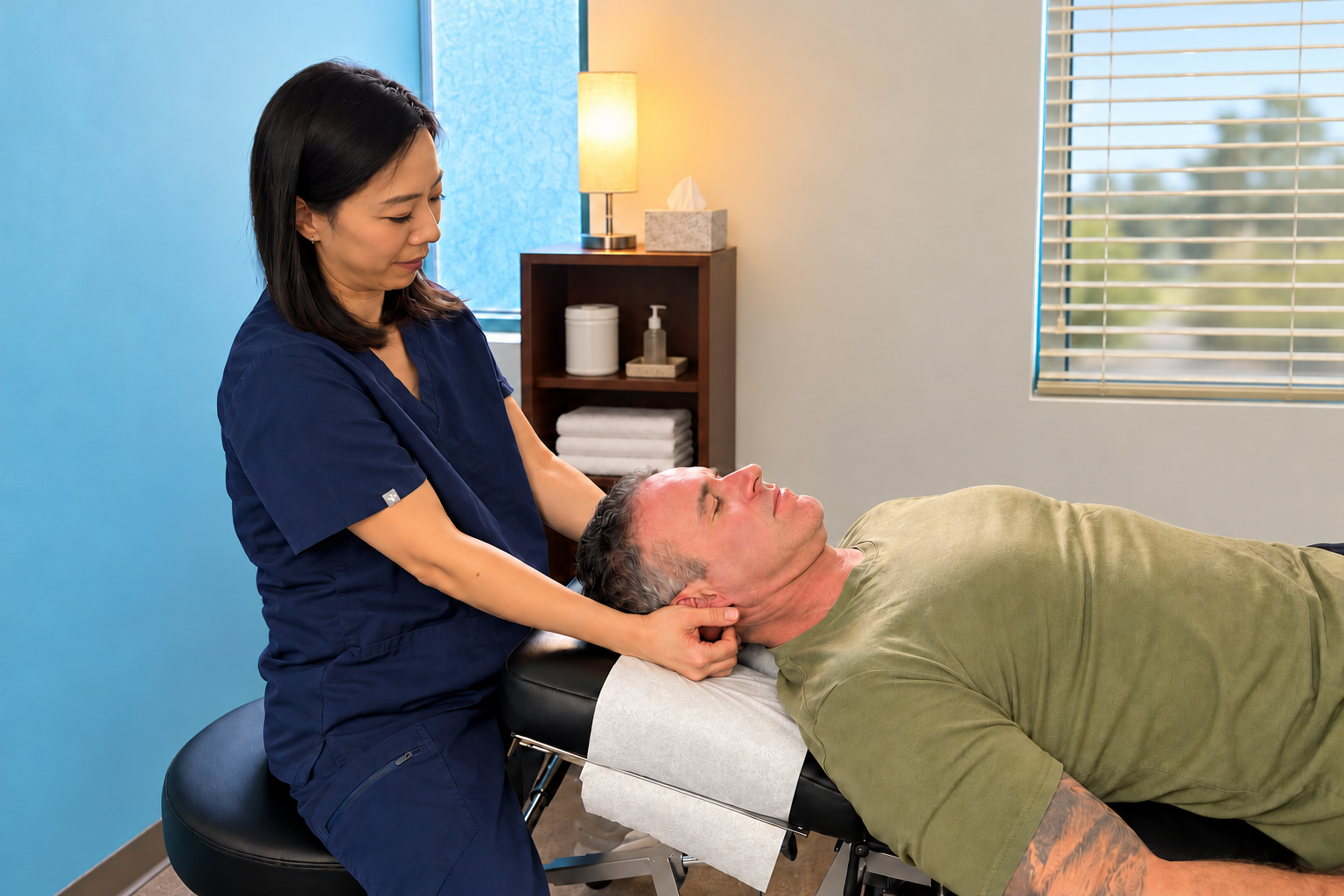
Your comfort comes first Talk through preferences before treatment.
Clear, practical goals Focus on how you move and feel day to day.
Collaborative care Explore the options that fit your evaluation.
Understand your care
What is chiropractic care?
Chiropractic care focuses on evaluating and managing problems involving the muscles, joints, and spine. It may include hands-on treatment, movement guidance, and advice for daily activities.
An adjustment uses a controlled force applied to a joint. Mobilization uses slower movement without a thrust. Your doctor explains the proposed approach, whether it is appropriate for you, and alternatives.
Our goal is to help you work toward more comfortable movement and better function—with a plan that reflects your health history and preferences.
What brings you here?
Care for the way you live and move.
Back pain & stiffness
Discomfort with sitting, bending, standing, or getting through your day. We assess your symptoms and discuss a starting point for care.
Neck & upper-back tension
Stiffness and discomfort related to movement or prolonged positions. Headaches need assessment to understand whether the neck may be contributing.
Injuries & movement concerns
Muscle strains, activity-related discomfort, and symptoms after an auto accident. Numbness, tingling, or radiating pain deserve a careful evaluation.
These are reasons to seek an evaluation, not a promise that an adjustment is appropriate for every condition. Explore our Conditions page .
Comfort matters
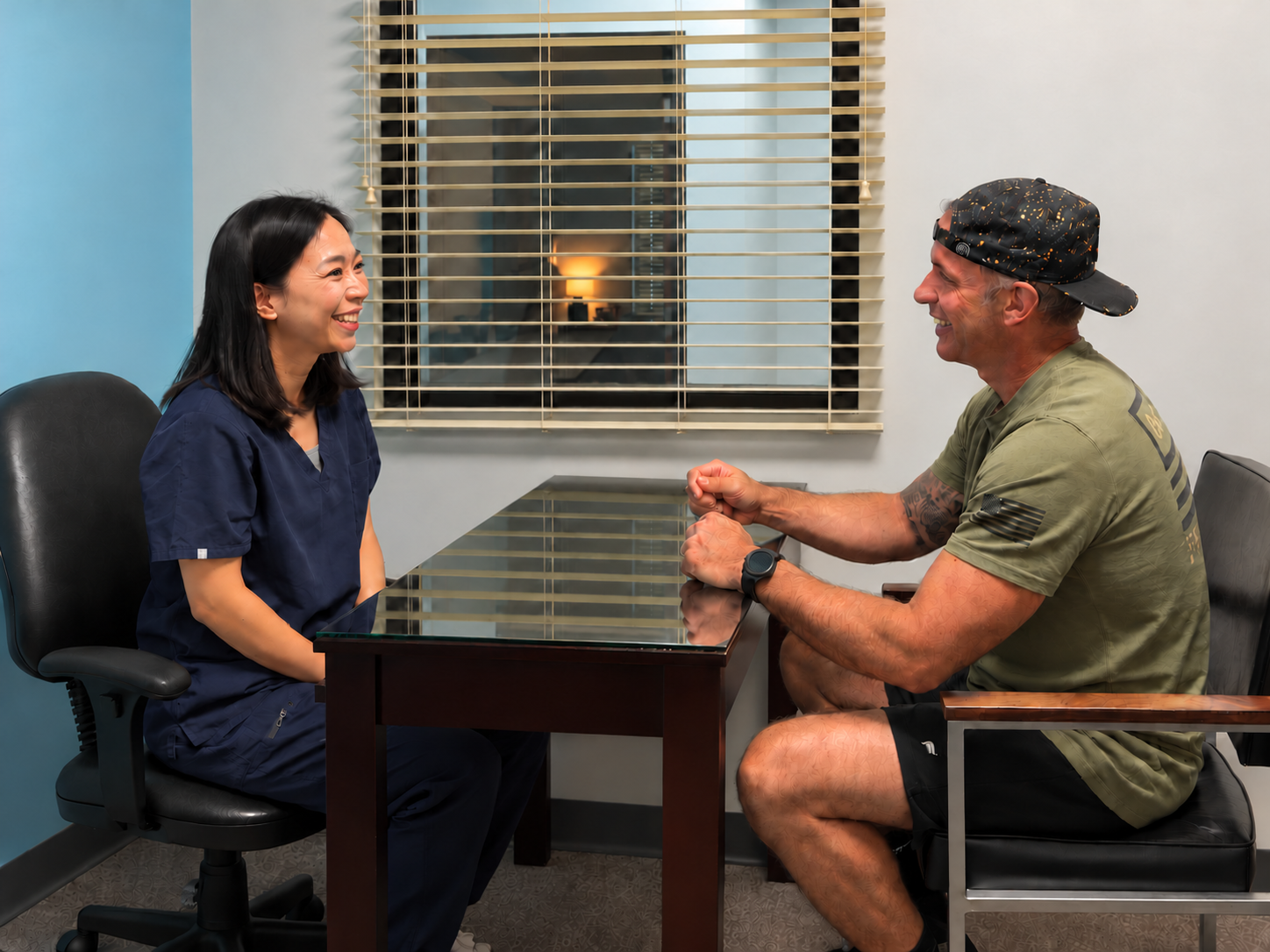
A conversation before an adjustment.
Feeling nervous about chiropractic care is understandable. Tell us what concerns you, what has helped before, and what you would prefer to avoid.
- We explain the proposed treatment before you consent.
- Discuss gentler approaches and alternatives with your doctor.
- You can ask for a pause or decline any treatment.
- Your comfort and response help guide the next step.
Options for your comfort
Different techniques. A plan that fits you.
Our chiropractic techniques include Diversified, mobilization, Activator, blocking, ArthroStim, and drop techniques. Your examination, health history, preferences, and response guide which approach we recommend.
A closer look
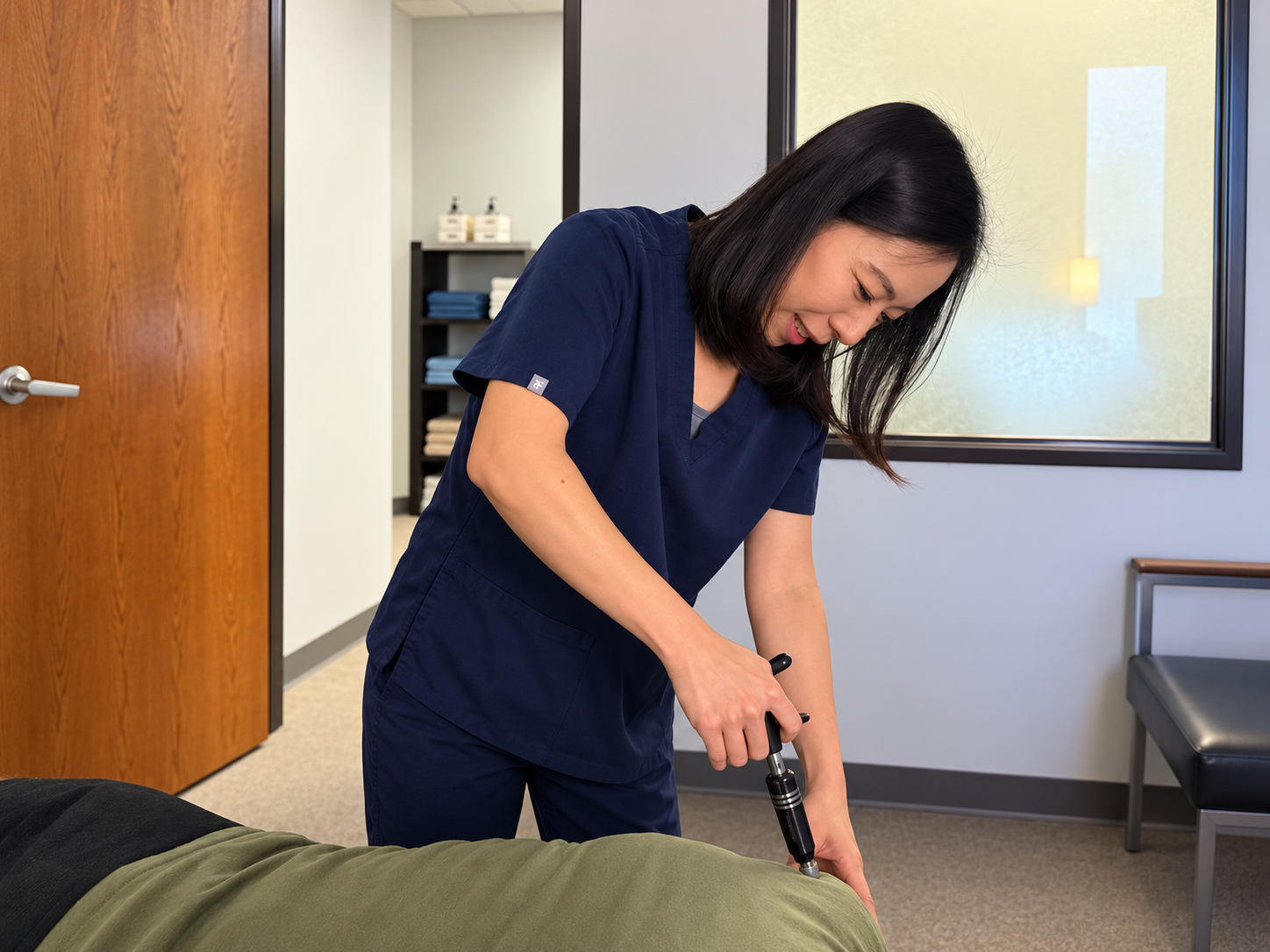
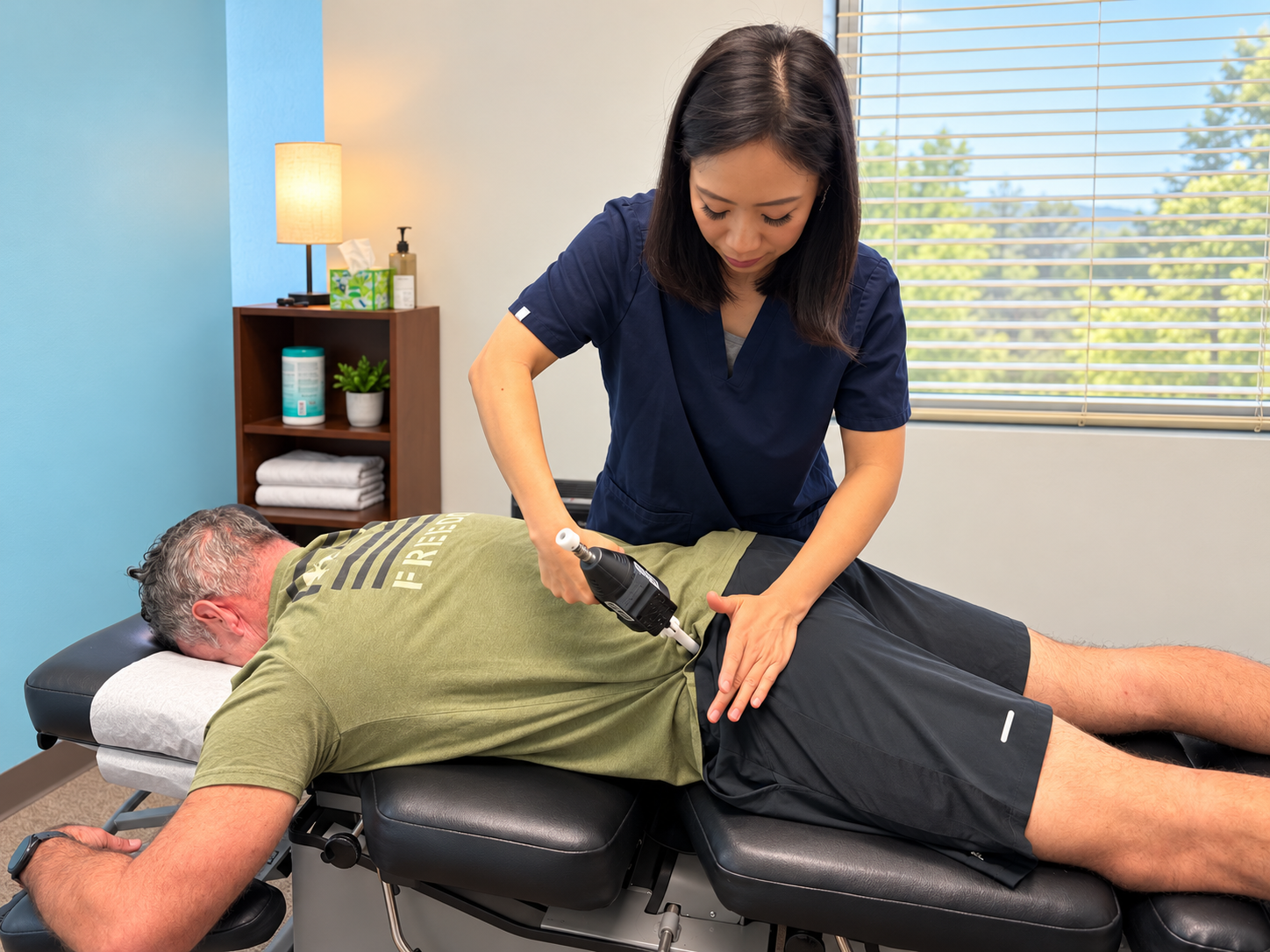
Instrument-assisted care in our clinic.
Activator and ArthroStim provide additional ways to deliver chiropractic care. We explain the proposed application and check your comfort throughout treatment.
Diversified
Hands-on adjustments using a specific, controlled thrust. Your doctor selects positioning and contact based on your examination and discusses the approach before treatment.
Mobilization
Slower, controlled joint movements without a thrust. Your doctor adjusts the movement to your comfort and discusses whether this approach fits your examination and goals.
Activator
A handheld adjusting instrument delivers a brief, controlled impulse. It provides an instrument-assisted option for patients who prefer a lower-force approach.
Blocking
Supportive wedges or blocks help position the pelvis or other areas of the body. This positioning-based approach may be incorporated when appropriate for your evaluation.
ArthroStim
A powered handheld instrument delivers a series of controlled impulses. Your doctor selects the contact and application, explains what you may feel, and checks your comfort.
Drop techniques
A section of the treatment table briefly releases during an adjustment. Your doctor explains the table movement and how this technique fits the proposed treatment.
A lower-force or instrument-assisted approach is still a treatment that needs evaluation and informed consent. Ask your doctor about benefits, risks, and alternatives; you can decline any technique.
Raphael 707 spinal treatment table
Spinal traction & decompression.
Our Raphael 707 allows us to incorporate table-assisted traction and flexion-distraction into a personalized chiropractic plan when appropriate.
Visual description: A patient lies face down, supported on the Raphael 707, while the table moves slowly during a traction demonstration. Your doctor selects positioning and settings after an evaluation.
Open the video separatelyWhat does treatment involve?
Traction applies a controlled pulling force, while flexion-distraction combines supported table movement with a stretching approach. Your doctor explains the positioning and proposed treatment, adjusts the application to your tolerance, and monitors your response.
Is it right for you?
Back discomfort or radiating symptoms need an evaluation first. Your medical history, examination, and any relevant imaging help determine whether traction is suitable, another approach would fit better, or a medical referral is needed.
What should you expect?
You may notice a pulling or stretching sensation. Tell your doctor right away about pain, increased tingling, or other discomfort so treatment can be adjusted or stopped.
Here, “decompression” refers to nonsurgical traction. It does not guarantee disc repair, reversal of a herniation, or avoidance of surgery.
Personalized, integrative care
The right plan may include more than an adjustment.
Joint-focused care
When appropriate, hands-on care may address joint movement. Your doctor discusses the technique and the reasons for recommending it.
Muscles & soft tissue
Myofascial release or other appropriate care may be considered for muscle tension alongside your chiropractic plan.
Movement between visits
Discuss practical activity changes and movement guidance that fit your daily routine. Progress should include how you function outside the office.
Acupuncture, cupping, or Kinetic Pulse Wave may also be considered when appropriate. You do not need every service; we explain why an option may fit your goals.
Learn about acupunctureYour first appointment
Know what to expect.
-
Tell us your story
Review symptoms, prior injuries, medications, relevant medical history, and the activities you want to get back to.
-
Evaluate your movement
Your doctor performs a relevant examination and considers whether further testing or medical referral is needed.
-
Discuss your options
Talk about findings, expected benefits, risks, alternatives, and your preferences before deciding whether to proceed.
-
Reassess your progress
Review your response and practical goals. Follow-up depends on your needs and progress, rather than a fixed schedule for everyone.
Useful information, realistic expectations
What does the research say?
Spinal manipulation may offer modest improvements in pain and function for some people with low-back pain. It is one of several treatment options, and results vary.
Evidence for other concerns differs. We discuss the limits of treatment and monitor whether care is helping you move, sleep, work, or do the activities that matter to you.
Read the NIH overview of spinal manipulation
For chronic nonspecific low-back pain, a 2025 Cochrane overview found traction probably does not reduce pain compared with sham traction. That review does not establish a benefit specific to the Raphael 707. We discuss these limits when considering traction and reassess your response rather than promising a result.
Read the Cochrane overview of nonsurgical low-back pain treatments
Your collaborative care team
People who listen. Care with a purpose.
Blissful Wellness brings acupuncture and chiropractic care together in Rancho Cucamonga. Your concerns, health history, and preferences guide the conversation.
Meet Jennifer Tsai, Joy Hsueh, and Michael Sun, and learn about each clinician’s credentials and approach.
Meet our teamSafety & informed choices
A thoughtful evaluation comes first.
Share your medications, osteoporosis or fracture history, recent surgery, neurological symptoms, pregnancy, and other health concerns before treatment. Some conditions require a different approach or medical referral.
Temporary soreness, stiffness, or headache can occur after manipulation. Rare serious complications have been reported. Neck manipulation has been associated with artery tears and stroke; your doctor should discuss potential risks and alternatives before you decide.
Seek urgent medical care for new or worsening weakness, loss of bowel or bladder control, numbness around the groin, or severe symptoms after a significant injury. Call 911 for sudden stroke symptoms such as facial drooping, trouble speaking, or one-sided weakness.
Answers before your visit
Chiropractic care: common questions.
What is spinal decompression on the Raphael 707?
At our practice, this refers to nonsurgical, table-assisted traction. The Raphael 707 can also support flexion-distraction. Your doctor evaluates whether either approach is appropriate and explains positioning, sensations, risks, and alternatives. Treatment does not guarantee disc repair or replace necessary medical or surgical evaluation.
Can I choose a gentler chiropractic technique?
Tell your doctor if you prefer an instrument-assisted or lower-force approach. Our options include mobilization, Activator, ArthroStim, blocking, and drop techniques, as well as Diversified adjustments. Your health history and examination help determine which options are appropriate; you can decline any proposed treatment.
Does an adjustment have to make a popping sound?
No. A sound is not the goal of care or a measure of success. Ask your doctor about the recommended technique and alternatives if you prefer a lower-force approach.
Will chiropractic treatment hurt?
Tell your doctor about sensitive areas and any discomfort during treatment. Temporary soreness or stiffness can occur afterward. Contact us if symptoms worsen or do not settle; seek urgent medical care for new weakness or other concerning symptoms.
Do I have to have my neck adjusted?
You can decline neck manipulation or any proposed treatment. Your doctor will discuss potential benefits, risks, and alternatives before you consent, including the rare but serious vascular risks associated with neck manipulation.
How many visits will I need?
There is no standard schedule for everyone. Your symptoms, examination, goals, and response help guide a proposed plan. We reassess progress and discuss changing the plan or referring you when appropriate.
Do I need X-rays or an MRI first?
Imaging is not automatically necessary for every patient. Your history and examination help determine whether imaging, prior records, or a medical referral would be useful before treatment.
Can chiropractic and acupuncture be combined?
They may be included in the same care plan when appropriate. We explain the purpose of each treatment and recommend options based on your evaluation, preferences, and progress.
Can I be evaluated after an auto accident?
Yes. Tell us when the accident occurred, what symptoms developed, and what medical care you have received. Significant injuries or concerning neurological symptoms may require urgent medical evaluation before office-based care.
Will my insurance cover chiropractic care?
Benefits vary by plan and may include visit limits, deductibles, copayments, or other restrictions. Use our insurance verification link before your appointment. Verification is not a guarantee of payment.
Blissful Wellness · Rancho Cucamonga
Start with a conversation.
Take the next step toward easier movement.
Bring your questions and your goals. We’ll help you understand whether chiropractic care fits your needs.