
Personalized care in Rancho Cucamonga
Hip pain care.
Move with more ease.
Personalized hip pain care in Rancho Cucamonga for discomfort with walking, stairs, sitting, or sleeping on your side.
At Blissful Wellness, we start by understanding where you hurt and how it affects your day. Your plan may include acupuncture, chiropractic care, and integrated myofascial release, alongside suitable exercise or medical care.
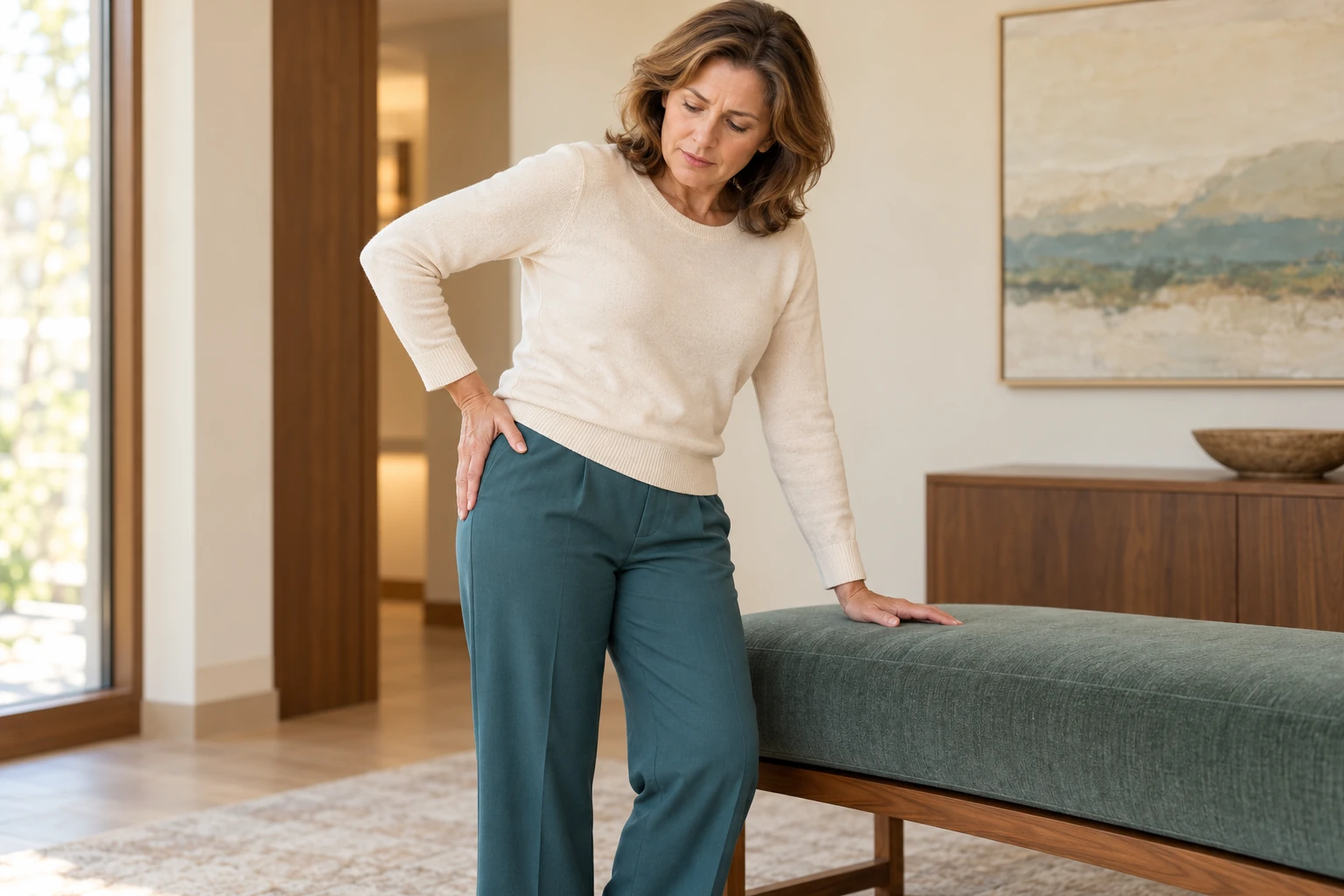
What brings you here?
Where you feel it
helps guide the conversation.
Hip pain can feel different from one person to the next. Tell us what you notice and which movements matter to you.
Outer-hip soreness
- Tenderness along the side of the hip
- Discomfort lying on that side
- Soreness with stairs or longer walks
Groin pain & stiffness
- A deep ache near the front of the hip
- Difficulty getting out of a low chair
- Stiffness putting on shoes or socks
Buttock & related pain
- Discomfort around the hip and buttock
- Symptoms affected by sitting
- Pain that may involve the back or thigh
These patterns are clues, not diagnoses. Severe pain after a fall or inability to bear weight needs immediate medical assessment. See when to seek medical care.
Understanding the source
The hip joint.
The tissues around it.
The bigger picture.
Hip pain may involve the joint, nearby tendons and muscles, or pain referred from another area. Therefore, care begins with an assessment rather than a single treatment for every symptom.
We consider your history, comfortable movement, and relevant clinical findings. Further medical evaluation or imaging may be needed.
Hip osteoarthritis
Joint changes can cause pain and stiffness. A plan focuses on comfort, function, and suitable activity. Supportive care does not rebuild cartilage.
Outer-hip tendon & bursa irritation
Greater trochanteric pain syndrome can involve the gluteal tendons or nearby bursa. Side-lying and repeated loading may aggravate symptoms.
Muscle strain or overuse
A change in activity or an injury can affect muscles and tendons. The amount and type of loading help guide recovery.
Pain related to the back
Some pain near the hip may come from the lower back. Tell us about radiating pain, tingling, or weakness. You can also explore our sciatica page.
Your first visit
Start with your story.
Build a practical plan.
Tell us when symptoms began and what makes them better or worse. Also bring relevant imaging reports, prior treatment details, and any guidance from your medical team.
Your goals matter. A more comfortable walk, easier stairs, or better sleep can each help us decide how to monitor progress.
-
Listen & clarify
First, we ask about pain location, activity changes, injury, sleep, and associated symptoms.
-
Assess movement
Next, your provider may assess hip motion, walking, and related back or leg movement when appropriate.
-
Choose care & review
Finally, we discuss suitable options and review your response. Rehabilitation or medical referral may be part of the plan.
Integrated support
Personalized care for hip pain.
Your diagnosis, goals, and comfort guide the approach. We combine services when appropriate and adjust care as your needs change.
Acupuncture
Acupuncture may be discussed as a supportive pain-management option. Needle selection and treatment are tailored to your comfort. However, evidence varies by condition, and hip-specific research has important limits.
Explore acupunctureMyofascial release
Integrated soft-tissue work may address surrounding muscle tension. We adjust pressure to your tolerance and clinical findings. Irritated outer-hip tissues may need gentler care rather than deep pressure.
Explore myofascial releaseChiropractic care
Assessment may identify suitable mobilization or related movement support. We consider the hip, pelvis, and lower back when relevant. Strengthening and rehabilitation remain important when indicated.
Explore chiropractic careBetween visits
Small changes.
More manageable days.
Ask which adjustments fit your symptoms. A useful plan balances comfortable movement with avoiding repeated aggravation.
Adjust activities
Shorter walks or fewer stairs may be easier temporarily. Then build activity gradually as your symptoms allow.
Reduce pressure
If the outer hip is sore, avoid lying directly on that side. Discuss comfortable sleep positions and support with your provider.
Build strength carefully
Tailored exercise can be part of care. Avoid forcing stretches or pushing through increasing pain; ask for guidance on suitable loading.
Helpful answers
Hip pain questions.
Understanding your symptoms
Does hip pain always mean arthritis?
No. Muscles, tendons, bursae, and referred pain can also cause symptoms near the hip. An assessment helps identify the next step.
Why does my hip hurt when I lie on my side?
Pressure on the outer hip can aggravate sensitive tissues, including those involved in greater trochanteric pain syndrome. However, this symptom alone cannot confirm the cause.
Could the pain be coming from my back?
Yes, some pain around the hip or buttock may be referred from the back. Tell your provider about radiating pain, numbness, tingling, or weakness.
Choosing your care
Can acupuncture help hip pain?
It may be considered for symptom support after assessment. Research depends on the cause. For hip osteoarthritis, the Cochrane review found little or no difference versus sham acupuncture, with less certain evidence of benefit when added to routine care.
Is deep pressure always better?
No. Irritated tissues may respond poorly to intense pressure. We tailor soft-tissue work to your tolerance and avoid assuming that stronger treatment gives better results.
Can I combine acupuncture and chiropractic care?
Yes, when suitable for your assessment and goals. Myofascial release may also be integrated. Your provider discusses which combination makes sense.
Planning your visit
Do I need imaging before my appointment?
Not every symptom requires imaging first. Your history and examination help determine whether an X-ray, other imaging, or medical referral is appropriate. Bring any existing reports.
Is hip pain care covered by insurance?
Coverage depends on your plan, the service, and medical necessity. Request verification before your appointment. Standalone massage is self-pay.
Blissful Wellness · Rancho Cucamonga
A plan for your hip.
A step toward your goals.
Tell us about your hip pain and the activities you want to enjoy more comfortably. Together, we will discuss an appropriate next step.