
Personalized care in Rancho Cucamonga
Knee pain care.
One step at a time.
When stairs, walking, or getting up from a chair become uncomfortable, start with understanding your knee.
At Blissful Wellness, we assess your symptoms and discuss an individualized plan. Acupuncture and integrated care may help support comfort and function, alongside appropriate movement, rehabilitation, and medical care.
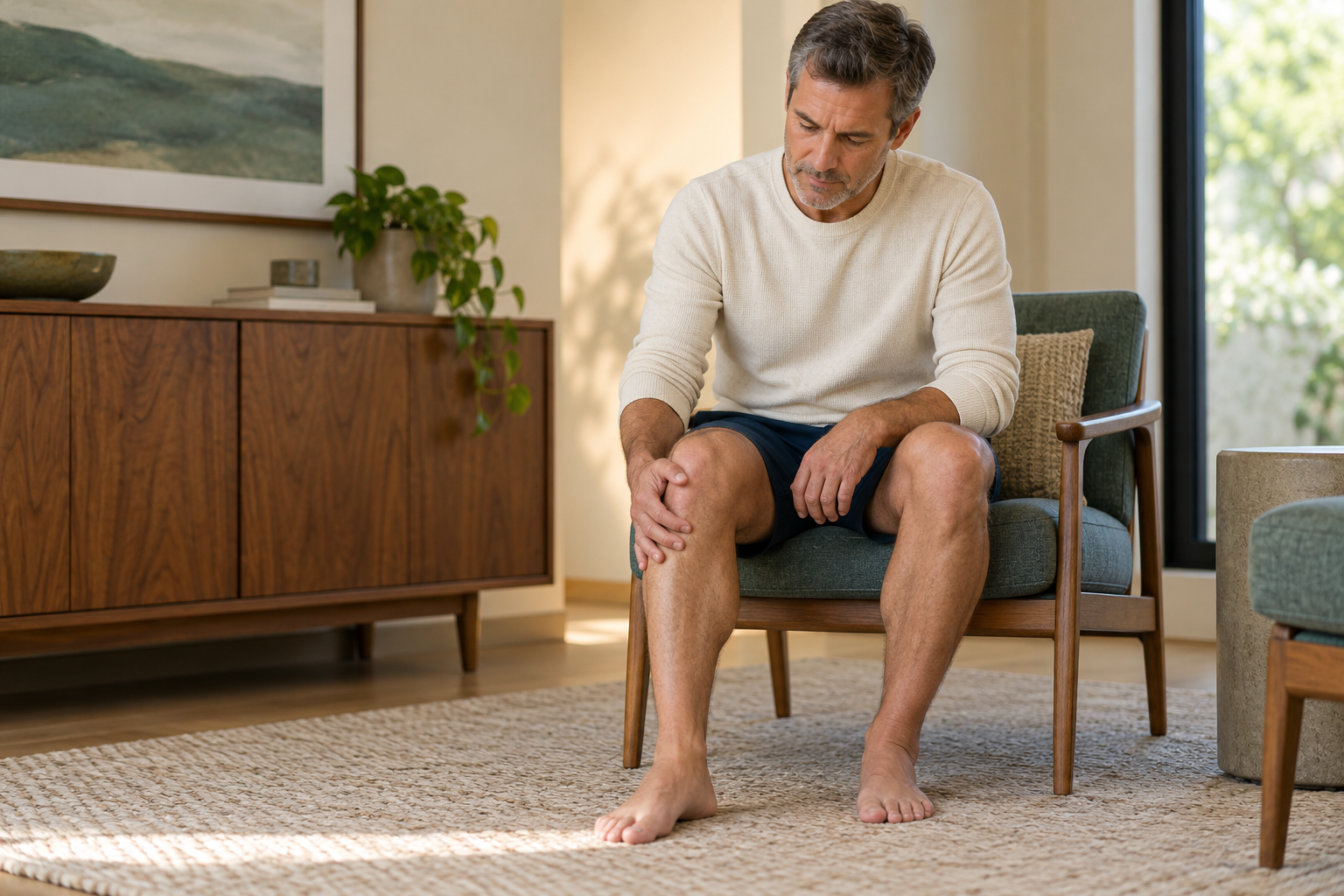
What brings you here?
Everyday movement.
A knee that needs attention.
Tell us where you feel discomfort and which activities you want to get back to doing.
Stairs & bending
- Discomfort using stairs
- Pain with squatting or kneeling
- Difficulty rising from a chair
Walking & activity
- Aching during daily walks
- Discomfort after increased activity
- Reduced confidence with movement
Stiffness & soreness
- Stiffness after sitting
- Recurring soreness around the knee
- Difficulty moving comfortably
Marked swelling, locking, or inability to bear weight needs prompt assessment. See the medical-care guidance below.
More than one possible cause
Similar symptoms.
Different next steps.
Knee discomfort may involve the joint, surrounding tendons, or other tissues. Your history and examination help guide care.
However, a symptom list alone cannot confirm arthritis or a torn meniscus. Tell us about any injury, swelling, or change in stability.
Osteoarthritis
Osteoarthritis can involve pain and stiffness. A plan may address symptoms and function while keeping appropriate activity and rehabilitation central.
Overuse & tendon irritation
Changes in activity or repeated loading can contribute to soreness. Therefore, the amount and type of activity matter when planning a return.
Injury & instability
A twist, fall, or impact may need further evaluation. Locking or giving way deserves assessment before routine treatment.
Your first visit
Listen. Assess.
Plan together.
Tell us when symptoms started, what changes them, and how they affect your day. Also bring relevant imaging reports or advice from your medical team.
Your goals shape the plan. A comfortable walk, easier stairs, or a gradual return to exercise can each guide the conversation.
-
Understand your history
First, we ask about injuries, activity changes, swelling, prior care, and any locking or giving way.
-
Assess relevant movement
Next, your provider may assess comfortable knee motion and related movement, including the hip or ankle when indicated.
-
Choose care & monitor
Finally, we discuss suitable options and how to review progress. Imaging, rehabilitation, or specialist referral may be appropriate.
Personalized support
Care that fits your knee.
We aim to support comfort and function. Treatment does not promise to rebuild cartilage or repair a torn ligament.
Acupuncture
Acupuncture may be considered for pain management, including some knee osteoarthritis symptoms. Your provider tailors needle selection and treatment to your needs. In addition, electroacupuncture may be discussed when suitable.
Explore acupunctureMyofascial release
Integrated soft-tissue work may address muscle tension around the knee and related areas. Pressure is adjusted to your comfort. However, supportive muscle work does not replace assessment of an injured joint.
Explore myofascial releaseChiropractic care
After assessment, your provider may discuss individualized mobilization or other approaches when appropriate. The plan considers your movement and clinical findings. Suitable rehabilitation remains an important part of care.
Explore chiropractic careBetween visits
Make movement manageable.
Ask your provider which activities fit your symptoms and assessment.
Adjust the load
Temporarily modify activities that worsen symptoms. Then plan a gradual return rather than pushing through increasing pain.
Build capacity gradually
For osteoarthritis, tailored strengthening and general activity are important. Discuss a suitable exercise or rehabilitation plan.
Track your progress
Notice how far you can walk and how stairs feel. Also tell your provider about new swelling, locking, or instability.
Helpful answers
Knee pain questions.
Understanding your symptoms
Does knee pain always mean arthritis?
No. Knee pain can have several causes. Therefore, an assessment is useful before deciding which care options fit.
What if my knee locks or gives way?
Arrange prompt medical assessment. These symptoms may need further investigation before supportive treatment. Do not continue an activity that feels unsafe.
Do I need an MRI before my appointment?
Not every knee complaint needs an MRI. Your history and examination help determine whether imaging or a medical referral is indicated. Bring any existing reports.
Choosing your care
Can acupuncture help knee osteoarthritis?
It may help some people manage pain and improve function. However, study findings and guideline recommendations vary. Discuss it as part of an individualized plan that includes appropriate exercise and medical care.
Can treatment repair a meniscus tear?
We do not claim that acupuncture or soft-tissue care repairs a torn meniscus. A suspected tear needs assessment. Supportive care should fit the recommended medical or rehabilitation plan.
Can care be combined?
Yes, when the approaches fit your assessment and goals. Myofascial release can be integrated with acupuncture or chiropractic care, with treatment adjusted to your tolerance.
Planning your visit
How many visits will I need?
That depends on the cause, duration, and severity of your symptoms and your response. We discuss a plan and reassess progress rather than promise a fixed number of visits.
Is knee pain care covered by insurance?
Coverage depends on your plan, the service, and medical necessity. Request verification before your appointment. Standalone massage is self-pay.
Blissful Wellness · Rancho Cucamonga
Understand your options.
Take the next step.
Tell us about your knee pain and what you want to get back to doing. Together, we will discuss an appropriate plan.