Low Back Pain Care in Rancho Cucamonga
Move better.
Live more comfortably.
Personalized low back pain care with acupuncture, chiropractic, and myofascial release.
When sitting, bending, or getting out of bed becomes uncomfortable, understanding your symptoms is the first step. We listen, evaluate, and build a plan around your comfort and the activities that matter to you.
What Brings You Here?
Not every backache
feels the same.
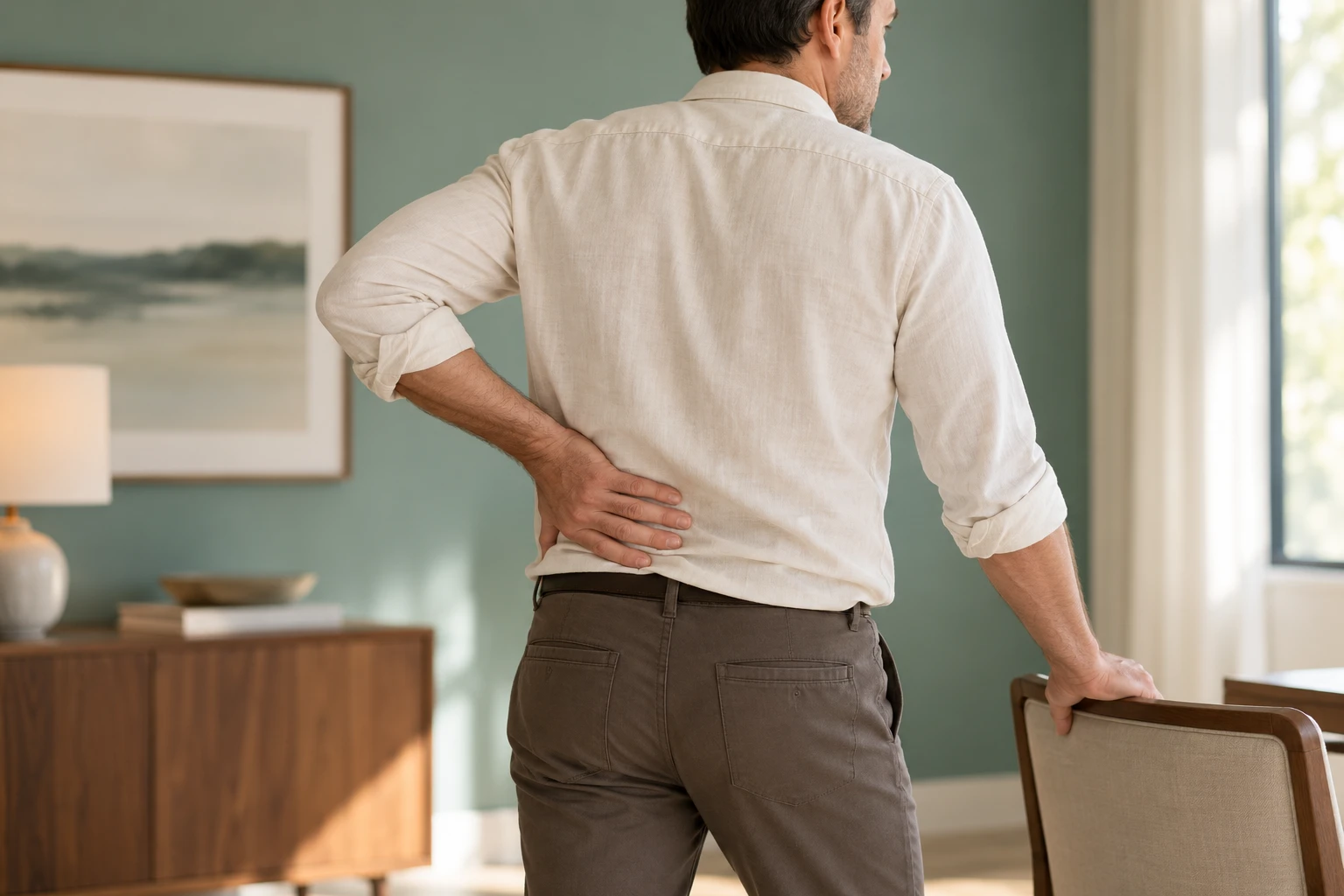
Tell us where you feel discomfort, when it started, and which movements or positions are difficult.
Aching & stiffness
- Tightness across the lower back
- Stiffness after sitting or sleeping
- Discomfort standing up or changing positions
Pain with everyday movement
- Discomfort bending or lifting
- Soreness after work or activity
- Recurring flare-ups that interrupt your routine
Symptoms into the buttock or leg
- Pain traveling beyond the lower back
- Tingling or numbness in the leg or foot
- Symptoms that may involve a nerve and need assessment
Low back symptoms can involve muscles, joints, discs, or nerves. Not all leg pain is sciatica, and an imaging finding does not tell the whole story. Your history and examination help us decide what matters for your care.
Your First Visit
Start with understanding.
Build from there.
We ask about your symptoms, previous injuries, health history, medications, and what you have already tried. We also want to know what feeling better would let you do again.
Your evaluation may include back and hip movement, walking, and relevant strength, sensation, or reflex checks when leg symptoms are present.
A plan you can discuss. We explain appropriate options, benefits, risks, and alternatives. You can share preferences and ask questions before treatment.
-
Understand the pattern
We consider where symptoms occur, how they change with movement, and whether additional assessment is needed.
-
Choose appropriate care
We recommend services and movement guidance based on your examination. Imaging or referral is considered when it may change care.
-
Track meaningful progress
We reassess comfort and practical goals such as sitting, walking, sleeping, or returning to activity.
Coordinated Care
Different approaches.
A plan that fits you.
Care may combine hands-on treatment with guidance for staying active. Your recommendations depend on your symptoms, examination, and response.
Acupuncture
Acupuncture may help relieve low back pain. Point selection and the needle approach are tailored to your needs and sensitivity.
We use eight needle sizes and discuss comfort throughout treatment.
Explore acupunctureChiropractic care
Care may include mobilization, manual adjustments, or instrument-assisted techniques when appropriate.
Our practice uses diversified, Activator, ArthroStim, blocking, and drop techniques. Your doctor selects suitable options and explains them with you.
Explore chiropractic careMyofascial release
Soft-tissue care addresses muscle tension and comfort using techniques such as trigger point work, MRT, deep tissue, and acupressure.
It is often integrated with acupuncture and chiropractic care, with pressure adjusted to your tolerance.
Explore myofascial releaseOther services, such as cupping , may be discussed when appropriate. Treatment does not guarantee a particular result, and we adjust the plan as your needs change.
Raphael 707 · Table-Assisted Care
Traction & decompression.
Understand your options.
At Blissful Wellness, “spinal decompression” refers to nonsurgical, table-assisted traction. Our Raphael 707 also supports flexion-distraction.
Visual description: A patient rests face down on the supported treatment table while it moves slowly during a traction demonstration.
Open the video separatelyWhat does it involve?
Traction applies a controlled pulling force. Flexion-distraction uses supported table movement and a stretching approach. Your doctor explains the proposed technique and adjusts it to your tolerance.
Is it right for everyone?
No. We evaluate whether table-assisted care is appropriate, discuss alternatives, and reassess your response. It is not a required part of every low back pain plan.
What can it realistically do?
Research does not establish routine traction as an effective treatment for low back pain or sciatica. It does not guarantee disc repair or replace necessary medical or surgical evaluation.
More about our table-assisted careBetween Visits
Keep moving.
Build confidence gradually.
For many people, comfortable activity and gradual progress are part of recovery. We can help you adapt these ideas to your symptoms.
Change positions regularly
Break up long periods of sitting. Try short, comfortable walks or gentle movement rather than staying in bed for long stretches.
Return to activity gradually
Build up movement and exercise at a pace that fits your current tolerance. Avoid forcing painful stretches or pushing through new leg symptoms.
Make daily tasks manageable
Reduce heavy loads during a flare-up, keep items close when lifting, and ask us about comfortable ways to sit, sleep, or get moving again.
Your Questions, Answered
Before your first visit.
Should I book acupuncture or chiropractic care?
Either may be a starting point depending on your needs and preferences. If you are unsure, call 909-276-7168. We can help you choose an initial appointment, and your clinician will recommend options after evaluating you.
Is pain down my leg always sciatica?
No. Pain into the buttock or leg can have different causes. Sciatica generally refers to symptoms associated with irritation of a nerve from the lower back. Tell us about tingling, numbness, or weakness so these symptoms can be assessed.
Do I need an X-ray or MRI before my visit?
Not everyone needs imaging. Your history and examination help determine whether a scan or referral is appropriate and likely to change care. Bring any existing reports you would like us to review.
Do I have to have an adjustment?
No. Share your preferences before treatment. Your clinician can discuss appropriate options, which may include mobilization, instrument-assisted techniques, acupuncture, or soft-tissue care.
Can traction repair a herniated disc?
Traction does not guarantee disc repair. The term “decompression” at our practice describes nonsurgical table-assisted traction. We discuss the limited evidence, appropriate alternatives, and whether another medical evaluation is needed.
Should I rest or keep moving?
Comfortable activity is generally encouraged for uncomplicated low back pain, rather than prolonged bed rest. Recommendations vary with your symptoms and examination. Ask us for guidance if an activity brings on new pain, weakness, or numbness.
How many visits will I need?
There is no fixed number for everyone. Recommendations depend on your symptoms, goals, examination findings, and response. We reassess your progress and discuss changes to the plan.
Can I use insurance?
Coverage depends on your plan and the services provided. Verify your insurance before scheduling. Standalone massage sessions are self-pay; coverage for integrated soft-tissue care varies.
Learn more from trusted health sources
Blissful Wellness · Rancho Cucamonga
Let’s make everyday movement
more comfortable.
Tell us what has been bothering your back. We’ll listen, evaluate, and help you understand your next step.