Personalized care in Rancho Cucamonga
Jaw pain & TMJ.
More comfort in everyday moments.
Jaw pain care in Rancho Cucamonga with acupuncture and integrated support for muscle tension, clenching-related soreness, and painful jaw movement.
Chewing, talking, and waking up should feel easier. At Blissful Wellness, we listen to your symptoms and discuss conservative care that fits your needs, alongside dental or medical evaluation when appropriate.
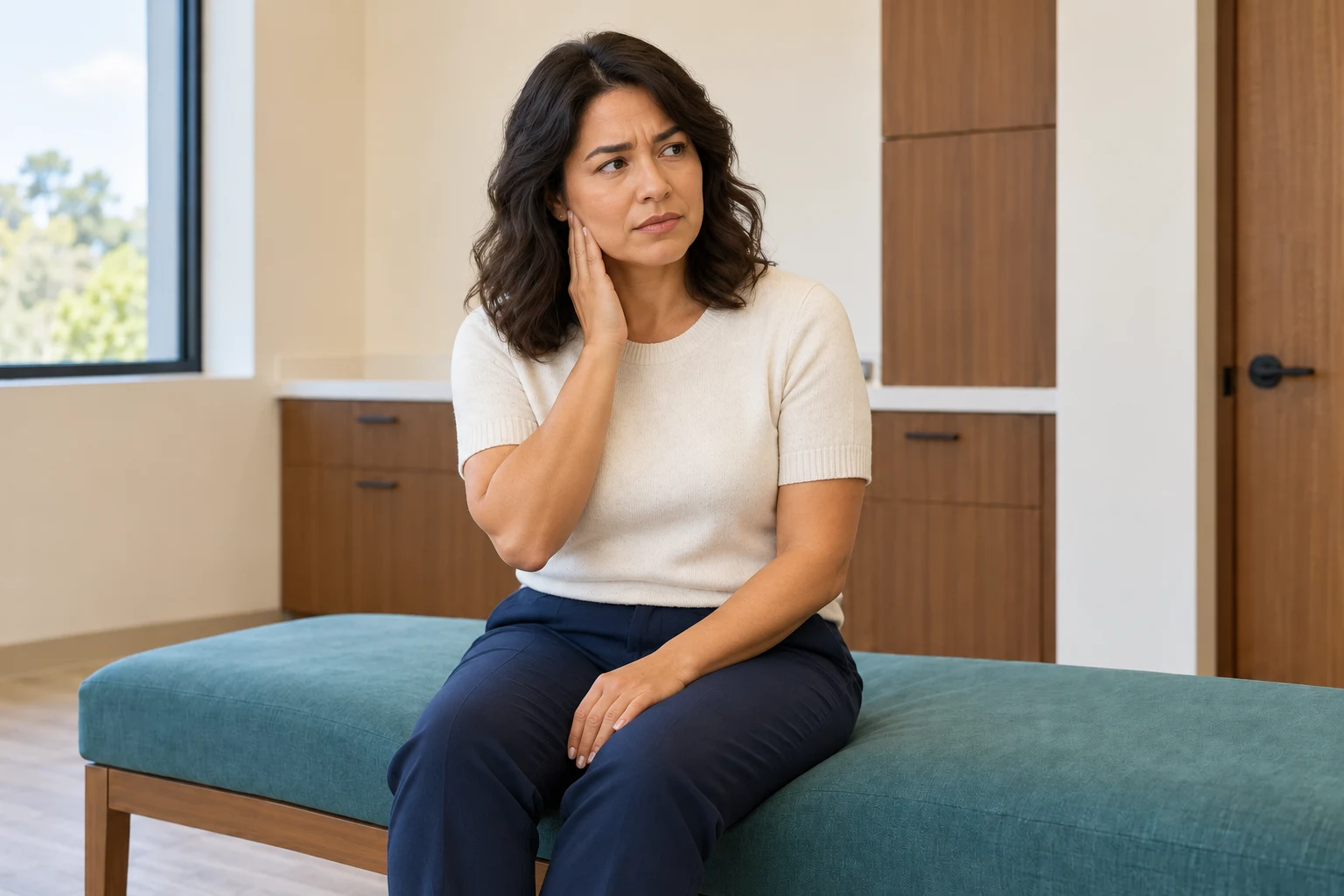
What brings you here?
Morning tension.
Chewing discomfort. A sore jaw.
Jaw-muscle soreness
Tenderness near the cheeks or temples, fatigue while chewing, or tightness after a stressful day can make ordinary activities uncomfortable.
Clenching & grinding
Tell us about waking with jaw soreness or noticing that you hold your teeth together. Your dentist can assess tooth wear and whether an appliance is appropriate.
Painful movement
Pain with opening, painful clicking, or limited motion deserves assessment. Painless clicking alone is common and usually does not need treatment.
A jaw that locks or prevents eating or drinking needs prompt assessment. See when to seek medical care.
Understand your symptoms
TMJ is the joint.
TMD describes the problem.
The temporomandibular joints, or TMJs, connect your lower jaw to your skull on each side. Temporomandibular disorders, or TMDs, affect those joints, the muscles used for chewing, or both.
People often use “TMJ” to describe jaw pain. Symptoms may include stiffness, painful movement, or discomfort that spreads to the face or neck.
Jaw pain has more than one possible cause. Dental problems, injuries, and other conditions can feel similar. We do not assume every painful jaw is a TMD or that a clicking joint needs to be “realigned.”
Your first visit
Start with your story.
Build a practical plan.
Tell us when symptoms started, what changes the pain, and whether chewing, sleep, or opening your mouth is affected. Bring relevant dental guidance, imaging reports, and information about previous treatment.
We discuss jaw-muscle symptoms and related neck tension, then explain suitable options. Dental assessment, physical therapy, or a specialist may be part of your plan.
-
Listen & assess
Review your symptoms, habits, health history, and comfortable movement.
-
Choose suitable care
Discuss treatment, comfort preferences, and any need for dental or medical evaluation.
-
Review meaningful progress
Track chewing comfort, jaw soreness, and day-to-day function. Adjust care based on your response.
Integrated support
Care for jaw pain.
Attention to the whole person.
Acupuncture
Acupuncture may help some people manage TMD pain and function. We tailor point selection and needle size to your comfort and discuss how it fits your overall plan. Explore acupuncture.
Myofascial release
Gentle, targeted soft-tissue work may address tension in the jaw muscles and surrounding neck or shoulder tissues when appropriate. Pressure is adjusted to your tolerance. Explore myofascial release.
Chiropractic care
Chiropractic care considers how your jaw and neck move. Gentle mobilization and other suitable techniques may address assessed movement restrictions. We choose techniques around your findings and comfort. Explore chiropractic care.
Acupuncture + chiropractic
Comfort and movement, considered together.
Jaw pain can involve sensitive muscles, irritated tissues, and difficulty moving comfortably. At Blissful Wellness, acupuncture and chiropractic care can be integrated into one individualized plan when both are appropriate.
Acupuncture: support for pain relief
Acupuncture may help ease TMD pain and improve function. We consider jaw-muscle soreness, tissue sensitivity, and your comfort when selecting treatment. Goals may include more comfortable chewing and less day-to-day soreness.
Chiropractic: attention to movement
Your chiropractor assesses jaw and neck motion and discusses gentle techniques for suitable restrictions. Myofascial work may also address surrounding muscle tension. The goal is easier, more comfortable movement during chewing, talking, and other daily activities.
One plan, reviewed together. We may combine these approaches with practical home guidance and dental care. Your symptoms and response guide the sequence and any changes to your plan.
Between visits
Small habits.
Less strain on your jaw.
Ease the chewing load
During a flare, choose softer foods and smaller bites. Avoid gum and hard or chewy foods that worsen symptoms, then return to usual eating as tolerated.
Notice clenching
Try brief check-ins during the day. Let your teeth rest apart when you are not eating. Relaxation and sleep support can be useful parts of care.
Keep movement comfortable
Use only exercises suited to your assessment. Avoid forcing the jaw open or repeatedly testing a painful click. Ask whether gentle warmth or a wrapped cold pack is appropriate.
Helpful answers
Jaw pain & TMJ questions.
Can acupuncture help TMJ pain?
It may help some people with TMD-related pain and function. Research is encouraging but has limits. Treatment is personalized and does not replace assessment of dental problems, infection, or injury.
Does a clicking jaw always need treatment?
No. Clicking or popping without pain is common and usually does not need treatment. Painful clicking, locking, or changes in movement should be assessed.
Should I see my dentist too?
Yes, when tooth pain, grinding, tooth wear, or a possible dental cause is involved. Dental and supportive care can complement each other. We do not provide dental appliances or change your bite.
Do I need a night guard?
Not everyone does. Ask your dentist whether an appliance is appropriate for your symptoms. If it increases pain, stop using it and contact the prescribing dentist.
Can stress make jaw symptoms worse?
Stress can contribute to clenching and muscle tension. That does not mean the pain is imaginary. A plan may combine symptom support, habit awareness, relaxation, and appropriate dental care.
Can I combine acupuncture and chiropractic for jaw pain?
Yes, when both are appropriate after assessment. Acupuncture may support pain relief, while chiropractic care addresses suitable movement restrictions and related neck concerns. We coordinate the plan around your comfort and progress, with dental care when needed.
Can neck tension be part of jaw pain?
Jaw symptoms can occur alongside neck pain. Your provider considers each area rather than assuming one is the sole cause. Care depends on the assessment.
Will treatment change my bite or permanently fix the joint?
Our supportive care does not permanently change your teeth or bite. We do not promise to reposition a jaw disc, repair joint damage, or cure every TMD.
How many visits will I need?
The plan depends on your symptoms, their duration, and your response. We discuss a review point and adjust care rather than promising a fixed number of visits.
Is treatment covered by insurance?
Coverage depends on your plan, the service, and medical necessity. Request verification before your appointment. Standalone massage is self-pay.
Blissful Wellness · Rancho Cucamonga
Less tension.
More comfort in your day.
Tell us how jaw pain affects your routine. Together, we will discuss suitable care and your next steps.