Chiropractic care · Rancho Cucamonga
Low-Back Traction & Spinal Decompression in Rancho Cucamonga
Explore table-assisted stretching with our Raphael 707. At Blissful Wellness, we use this table for the lower back as an optional part of chiropractic care, selected after an evaluation.
The table portion typically lasts about 10 minutes and is included in your chiropractic appointment when your doctor finds it appropriate for your condition. Not every patient receives traction, for example patients with contraindications or with neck pain only. Acupuncture is optional.
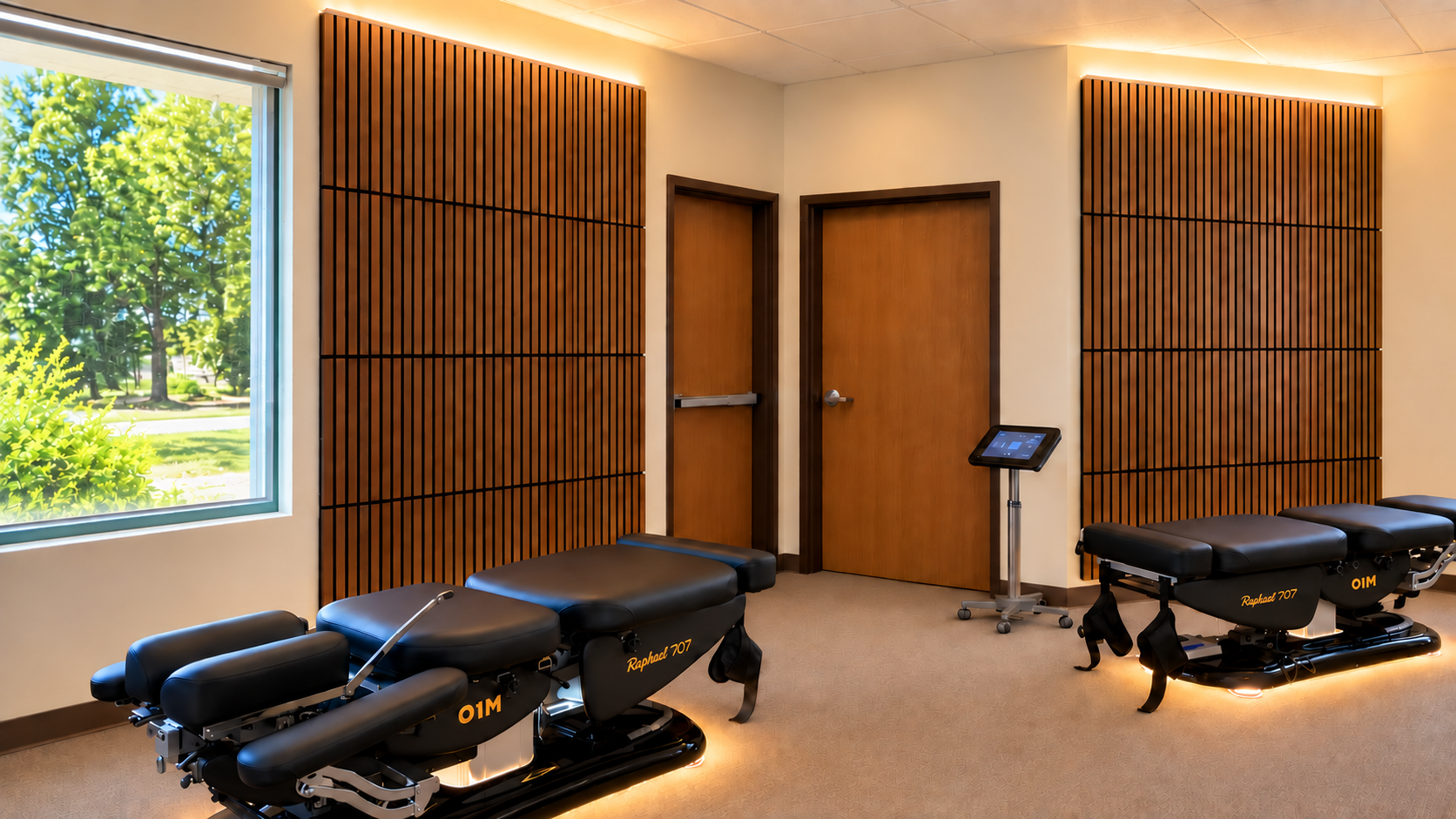
Table-assisted care, selected for you
How we use the Raphael 707
Traction applies a controlled pulling force. Our table allows a lengthwise, or axial, stretch along with flexion-distraction: supported bending and stretching movements. Your doctor can also select movement toward one side or the other.
We adjust the intensity, stretch duration, hold time, and balance of axial and flexion movement to your comfort and response. We begin with a minimal setting and increase it only when appropriate. A stronger stretch is not automatically better.
Here, “decompression” describes nonsurgical traction. It is not surgery, and it does not establish that a disc has been repaired or a nerve has healed.
See table-assisted care
See how the table is used
Face-down traction
Face-up traction
Positioned for your comfort
Positioning and settings are selected individually. Your doctor explains whether traction is appropriate for your condition.
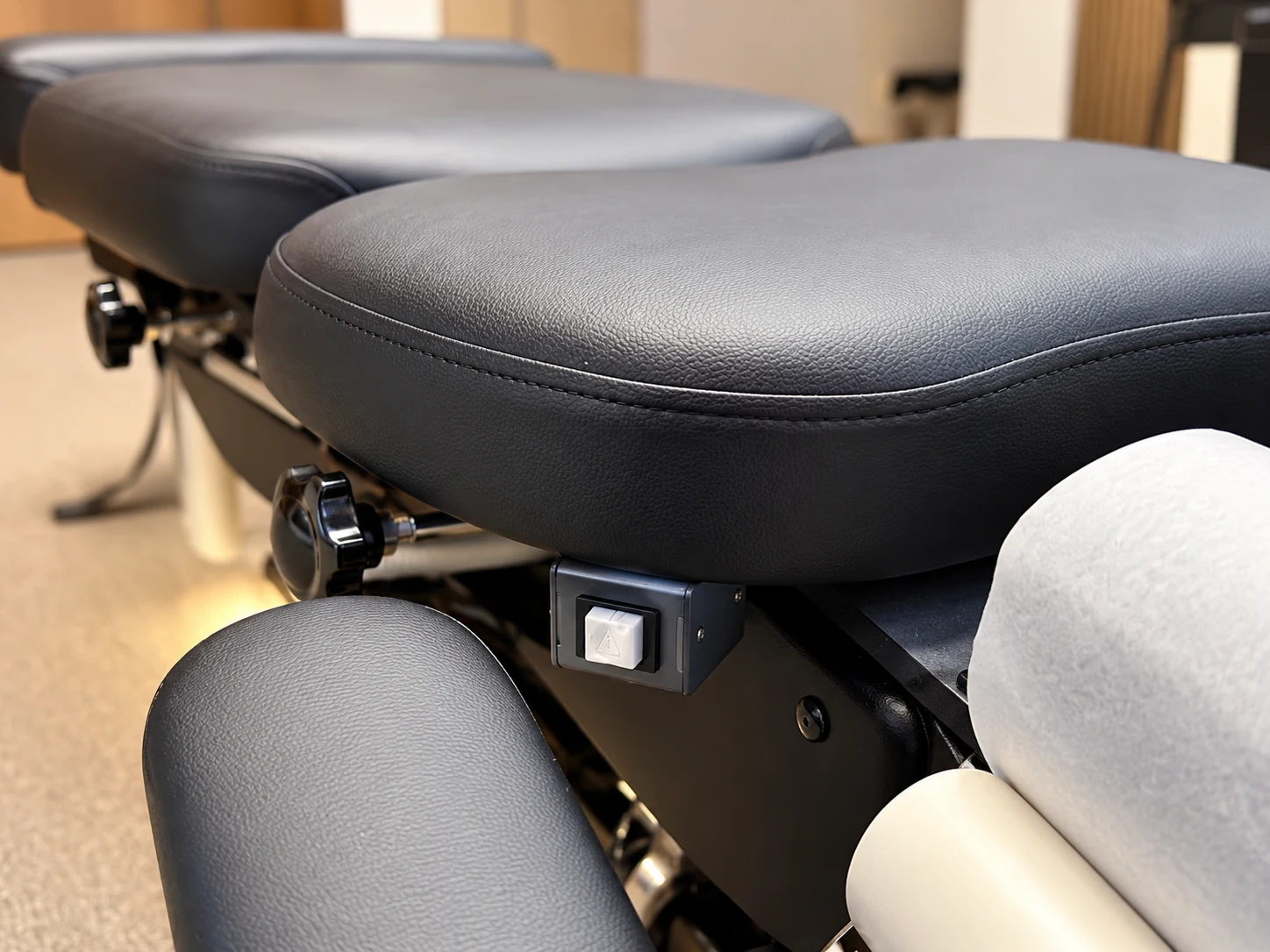
You have a stop control and can stop the table at any time.
Your visit, step by step
What happens during a traction visit?
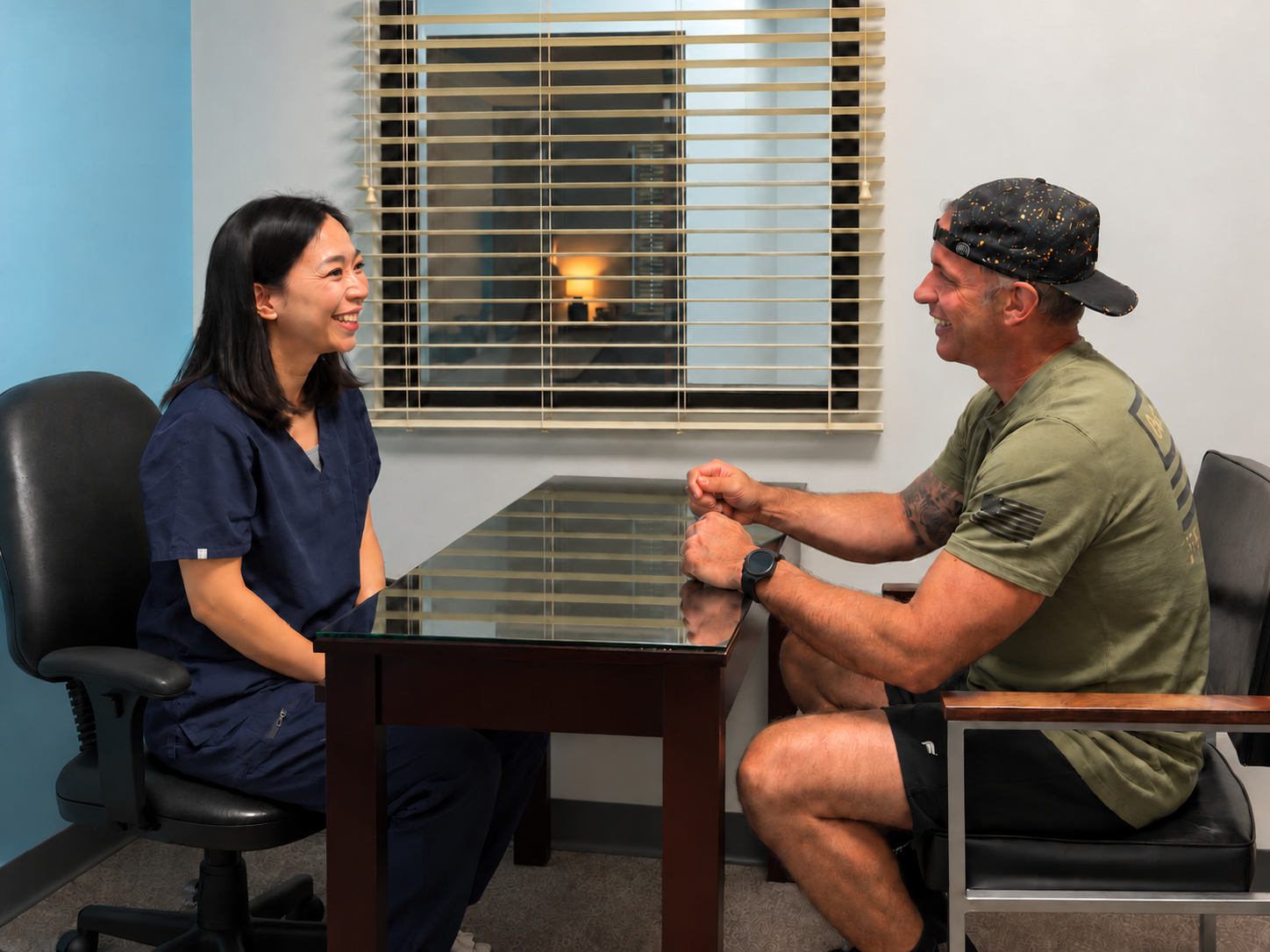
- Evaluation: Your doctor reviews your symptoms, history, examination findings, and relevant imaging before discussing suitability and alternatives.
- Positioning and setup: Treatment can be face down or face up when lying face down is difficult, if the position is suitable for you.
- A gentle starting point: Your doctor or a trained staff member is present at the beginning to position you and set up the treatment according to your doctor’s plan. You have a stop control and can stop the table at any time.
- Review afterward: Your doctor or a trained staff member returns at the end to check how you feel. Tell the team about your response so your doctor can guide your care. The table portion is usually about 10 minutes.
Comfort comes first
A controlled stretch.
A plan that can change.
Comfort and realistic expectations
You may feel a controlled stretch during treatment and a stretched or looser feeling afterward. Some patients report relief of back or radiating symptoms, but others notice little benefit or experience increased discomfort.
Relief of pain, tingling, or numbness is not guaranteed. Changes in sensation need clinical assessment and are not proof of disc repair. Your response helps guide whether to continue, adjust, or choose another approach.
Use the stop control if you develop pain, increased tingling or numbness, or other discomfort, and tell your doctor. You do not need to tolerate a painful stretch.
Useful information, realistic expectations
What does the evidence say?
Traction research gives mixed results. Some people with pain traveling down the leg from a back nerve problem may get short-term relief when traction is added to other care. Benefits are less clear for ongoing back pain without that specific problem.
Pain traveling down the leg
A 2025 study found more people had some relief of leg pain when traction was added to medical treatment. The study involved people with a disc problem that matched their symptoms. It took place at one hospital, and patients knew which treatment they received. Their care also included medicine and spinal injections. The results do not prove that our Raphael 707 table or settings provide the same benefit.
Short-term pain and disability
A review found possible short-term relief when face-up traction was added to physical therapy. Those positive findings came from weaker studies. Stronger studies of face-down traction did not find a clear added benefit. This does not mean one position is best for everyone.
Guidelines and treatment choices
NICE recommends against traction for low-back pain with or without sciatica. We explain this recommendation alongside the limited positive findings in selected patients. Traction is optional; alternatives include activity and exercise-based care, with other treatment chosen after assessment.
Ongoing low-back pain
A large research overview found that traction probably does not reduce ongoing back pain more than sham traction, a comparison treatment designed to resemble it. These findings apply to back pain without a clear single cause.
These studies do not establish disc repair, restored sensation, or lasting relief from our treatment. Traction can also aggravate symptoms. We discuss the uncertainty, alternatives, and your goals before deciding whether a trial fits your care, and reassess your response.
Read the research: 2025 randomized trial of disc-related radicular pain · 2021 lumbar radiculopathy systematic review · 2025 Cochrane overview.
Answers before your visit
Questions about low-back traction
Is this treatment for the neck?
No. At Blissful Wellness, we use the Raphael 707 for the lower back. Ask about a separate evaluation for neck concerns.
Can I lie face up?
Yes, the table can accommodate face-up positioning for patients who cannot comfortably lie face down. Your doctor determines whether that position and treatment are suitable.
Is traction included in chiropractic care?
It depends on your condition. When your doctor finds it appropriate, the approximately 10-minute table treatment is included in your chiropractic appointment. It is not used for every patient, for example patients with contraindications or with neck pain only, and it is not automatically used at every visit. Insurance coverage and patient responsibility depend on your plan; benefit verification is not a guarantee of payment.
Will someone stay beside me throughout?
Your doctor or a trained staff member is present at the beginning and end of the table treatment. You have a patient-operated stop control and can stop the table at any time.
Can I request it for disc-related or radiating symptoms?
You can ask about it during your chiropractic evaluation. Radiating pain, numbness, and tingling require assessment before choosing a treatment. Symptoms alone do not establish that traction is appropriate.
How many treatments will I need?
There is no standard number for everyone. Your doctor considers your response and functional goals when discussing whether to continue or change your care.
Your collaborative care team
Start with an evaluation
Our chiropractors, Dr. Jennifer Tsai, Dr. Michael Sun, and Dr. Joy Hsueh, discuss options based on your needs and comfort.



Book Chiropractic Call (909) 276-7168
Explore chiropractic care · Gentle chiropractic options · Low-back pain care · Your first visit
Visit us at 8002 Haven Avenue, Rancho Cucamonga, CA 91730.